Symbolism in design
CategoriesArchitecture Independence

Symbolism in Design: Mosques, Monuments, and Memory

From Heritage Monuments to Modern Icons – A Nation’s Story in Stone and Steel

Every year, as the 14th of August approaches, Pakistanis everywhere reflect on the journey of our nation—its sacrifices, its victories, and its dreams for the future. While we often speak of independence in political and historical terms, there is another, equally powerful way to witness our nation’s story—through its architecture.

Buildings are not just physical spaces; they are expressions of who we are. They embody our values, record our history, and shape our collective vision. From the soaring domes of the Badshahi Mosque to the sleek glass façade of Citadel 7, our architecture is a bridge between past and future, tradition and progress. It tells the story of Pakistan in a language of stone, steel, and art.


Architecture and Identity: The Spirit in Our Structures

The connection between architecture and identity runs deep. Our monuments, mosques, gardens, and civic spaces are not just functional—they reflect the values and ideals of the people who built them.

The Badshahi Mosque in Lahore, commissioned in 1673, still stands as a symbol of unity and faith. Its grand scale reflects the strength of belief that bound people together centuries ago—much like the unity that inspired the Pakistan Movement. Similarly, the Pakistan Monument in Islamabad, designed in the shape of blooming petals, tells the story of a nation’s growth, struggle, and hope.

When we walk into these spaces, we are not just entering buildings—we are stepping into history. Their designs carry the values of dignity, ambition, and perseverance—values that have shaped our national character.


Architecture and Cultural Heritage: Honoring the Past

Pakistan’s architecture and cultural heritage is one of our richest treasures. It is a tangible record of who we are and where we came from. Sites like the Lahore Fort and Shalimar Gardens are more than tourist destinations—they are living archives.

The Lahore Fort’s walls hold the stories of rulers and artisans, battles and celebrations. The Shalimar Gardens, with their meticulously planned water channels and floral layouts, reflect the Mughal vision of paradise on earth. Every carving, arch, and pattern is part of a cultural code passed down through generations.

Lahore Fort

Preserving these structures is about more than maintaining old buildings—it is about keeping alive the lessons of patience, artistry, and community spirit. In a rapidly changing world, these monuments anchor us, reminding us of the craftsmanship and vision that have always been part of our identity.


Architecture and Culture: A Living Connection

In Pakistan, architecture and culture are inseparable. Our designs often blend Islamic art with local craftsmanship, creating a distinctive style that is uniquely ours. From the intricate tilework of mosques in Multan to the brick patterns of Sindh, our architecture speaks the language of our land.

Even in modern times, architects and designers continue to draw on this cultural heritage. The use of calligraphy, symmetry, and geometric patterns in contemporary spaces is a reminder that while our nation moves forward, our roots remain strong.

Architecture also has the power to drive change. Visionaries like Yasmeen Lari have shown that design can serve communities in times of crisis, building homes and shelters that are not only functional but also dignified. This is architecture at its best—serving people while reflecting their cultural and spiritual values.


Why Design Matters in Representing Emotion and History

Design is not decoration—it’s storytelling. The way a building looks, feels, and functions can shape our emotions and the way we remember history.

Consider the Badshahi Mosque: its massive courtyard and towering minarets create a sense of unity, making worshippers feel part of something larger than themselves. Or the Quaid-e-Azam Mausoleum in Karachi: its pure white marble and simple lines speak of strength, purity, and resolve—qualities we associate with the founder of our nation.

This is why design matters—it can capture the spirit of a moment, the values of a generation, and the aspirations of a people. Architecture becomes a silent but enduring witness to the nation’s story, holding within its walls the memory of our struggles and the pride of our achievements.


Citadel 7: A Modern Symbol for an Independent Future

As we celebrate Pakistan’s independence, it’s important to honor our past—but also to look forward. Our skyline is changing, and with it, the way we express our identity.

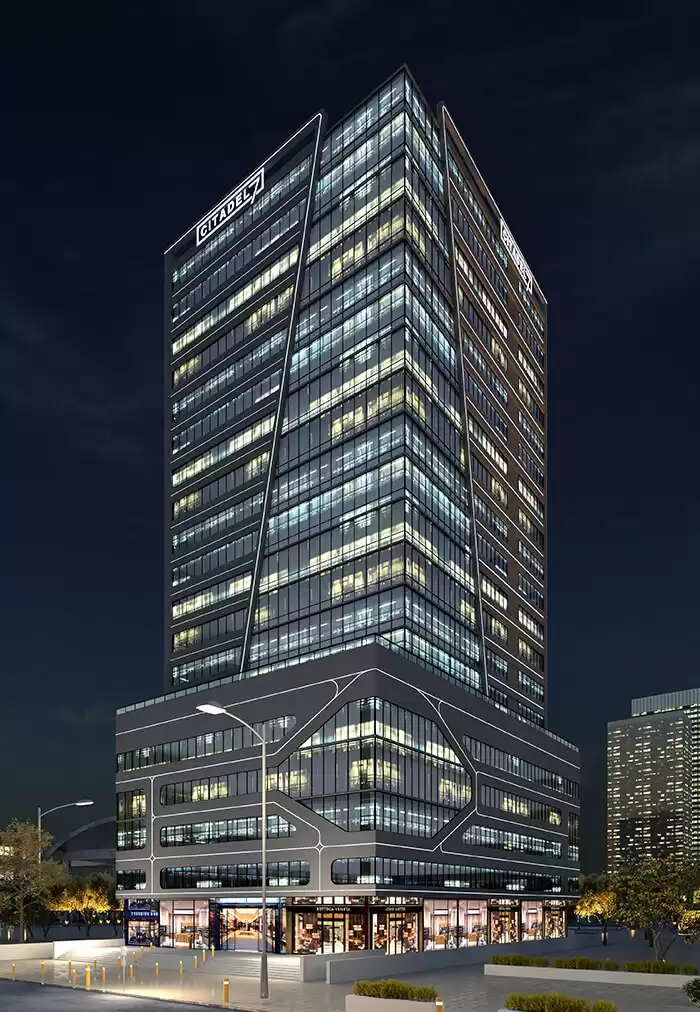
Citadel 7, a flagship corporate and commercial tower in Islamabad’s Blue Area, represents the next chapter in Pakistan’s architectural journey. Its striking 3D glass façade is more than an engineering achievement—it’s a statement of ambition, progress, and confidence in our future.
citadel7

Just as heritage sites like Lahore Fort and the Badshahi Mosque defined their times, Citadel 7 aims to be a modern icon. It is designed not only to offer premium office and commercial space but also to create an environment that attracts investment, generates employment, and inspires innovation.

What makes Citadel 7 unique is how it blends modern design with cultural sensibilities. In its sleek lines and strategic location, it reflects Pakistan’s openness to the global market. In its ambition and vision, it reflects the same national spirit that built our greatest monuments.


Architecture as a Journey from 1947 to 2047

In 1947, Pakistan’s founders envisioned a nation that would stand strong on its values while embracing progress. Our architecture reflects that balance—rooted in tradition yet open to change.

From the government buildings of the early years to the iconic Faisal Mosque, and now to projects like Citadel 7 corporate tower Islamabad, we see a clear progression. Each era has added its voice to the national story. If we think ahead to Pakistan’s 100th Independence in 2047, the buildings we create today will be the heritage of tomorrow.

This makes architecture a responsibility as much as an art. It is about creating spaces that honor our culture, serve our people, and inspire our future.


A Call to Build with Purpose

As we raise our flags and celebrate another year of independence, let us remember that nation-building is not only the work of governments—it is also the work of designers, architects, and builders.

Every mosque, monument, school, office tower, and public space we create should reflect the values that define us: dignity, unity, resilience, and ambition. This is the connection between architecture and identity—and why it matters so deeply in shaping our national journey.

Our architecture tells the story of Pakistan, from the monuments of yesterday to the landmarks of tomorrow. And like our nation, it will keep rising.


This Independence Day, let us honor our heritage, celebrate our culture, and commit to building a future worthy of the dreams that gave us our freedom.

Because in every stone and steel beam, in every dome and skyscraper, the story of Pakistan lives on.

The role of architecture in nation building
CategoriesArchitecture Independence

The Role of Architecture in Nation-Building: How Civic Spaces Shape Identity and Urban Society

Architecture doesn’t just shape skylines. It shapes societies.

This article is Part 4 of our Independence Day Blog Series, where we explore how Pakistan’s infrastructure, cities, and design reflect deeper values of unity, progress, and national purpose. In this blog, we break down the real reason architecture matters: because it gives structure to our values, shape to our identity, and a foundation for national growth.

Let’s dive in.


Architecture Defines a Nation’s Face

Every country has symbols: a flag, an anthem, a national animal. But few symbols are as visible—or as permanent—as architecture.

Think of the Mughal era. The role of art and architecture of Muslims in the subcontinent gave us iconic structures: Badshahi Mosque, Shalimar Gardens, Lahore Fort. These weren’t just beautiful landmarks—they were bold expressions of culture, confidence, and intention.

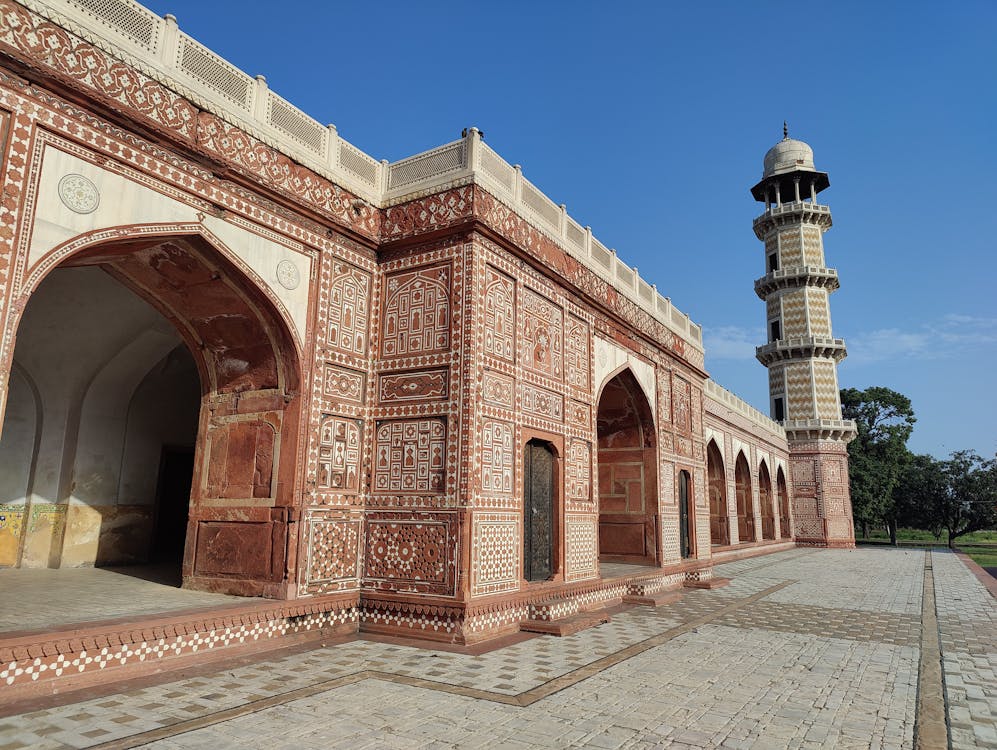
Jehangir Tomb

Fast forward to today. The Parliament House. The Supreme Court. The Pakistan Monument. These buildings do more than serve a function. They carry meaning. They reflect who we are as a nation—and how we feel about the institutions that represent us.

That’s the true role of architecture in shaping cities. It defines how we see ourselves. It reflects the values we claim.


Housing: The Most Human Architecture of All

When we talk about nation-building, we have to talk about homes. Because no nation can succeed if its people don’t have shelter.

Public housing is more than walls and roofs. It’s an expression of national care. It’s a government saying, “You matter.”

But here’s the catch: poorly planned housing leads to frustration, isolation, and urban decay. Great housing, on the other hand, creates trust, stability, and community.

That’s why the role of architecture in shaping cityscapes is so crucial. Great housing needs to be part of a system. Near transport. Near jobs. Near schools. With green spaces and places to gather.

Because a home is where a life begins—but a neighbourhood is where it thrives.


Civic Buildings = Civic Trust

Every time you step into a city hall, a courthouse, or a government office, architecture is speaking to you.

Is it saying “you’re welcome”?
Or is it saying “you don’t belong here”?

That’s why civic buildings matter so much. They are physical symbols of democracy, justice, and accountability.

Historically, colonial powers used architecture to project authority. Giant facades. Domes. Arches. The idea was clear: this is who’s in charge.

Civic building

Modern civic buildings should do the opposite. They should invite, involve, and inspire.

Because if architecture is going to play a role in nation-building, it has to create spaces where people feel heard. Spaces that say: “this country belongs to you.”


Public Spaces = Social Glue

Cities aren’t just about buildings. They’re about people. And people need places to connect.

That’s where architecture steps in again.

Well-designed public spaces—parks, plazas, libraries, walkways—don’t just make cities pretty. They make cities livable.

They promote mental health.
They promote diversity.
They promote unity.

The role of architecture in shaping society goes beyond construction. It builds interaction, belonging, and shared experience.

When you design for inclusion, you design for strength. And that’s how you build a resilient nation.


Architecture = Jobs + Growth + Impact

Architecture isn’t just about form. It’s also about function. And one of those functions? Fueling the economy.

From design to construction to tourism, architecture creates thousands of jobs. It drives urban renewal. It attracts investment. It raises property values.

And few examples in Pakistan illustrate this better than Citadel 7.

citadel7

Located in Islamabad’s Blue Area, Citadel 7 is a state-of-the-art corporate tower Islamabad that contributes to national development in three ways:

  1. Employment: Construction and long-term operations support hundreds of jobs.
  2. Design Innovation: The 3D glass facade and intelligent architecture raise the bar for future projects.
  3. Urban Impact: It enhances Islamabad’s skyline, aligns with the capital’s master plan, and boosts business confidence in Pakistan.

Citadel 7 isn’t just real estate. It’s a message built in glass and steel.

A signal that says: we’re building smart. We’re building forward. We’re building a better Pakistan.


Sustainability Is the Future

We can’t talk about architecture today without talking about the environment. Because the cities of the future will be sustainable—or they won’t work at all.

Good architecture now means:

  • Green roofs and vertical gardens
  • Energy-efficient materials
  • Solar panels and rainwater collection
  • Spaces designed to reduce heat and waste

This kind of architecture isn’t just good for the planet. It’s good for people. It lowers bills. Improves health. Creates long-term stability.

That’s why the role of architecture in shaping cities now includes ecological responsibility. And why nation-building has to include climate-smart construction.


Measurement: How You Know It’s Working

Can you measure architecture? Yes. And you should.

Cities around the world now assess architectural impact through:

  • Mobility and walkability scores
  • Access to green space
  • Building efficiency
  • Public satisfaction

Why? Because what you don’t measure, you can’t improve.

If architecture is going to support social equity, economic growth, and climate resilience, we need to track how it performs. That’s how we ensure cities evolve—and nations progress.


Final Thoughts: Build More Than Buildings

In this Independence Day blog series, we’ve looked at how roads, monuments, and cities tell the story of Pakistan.

But here’s the truth:
The real story isn’t in the stone.
It’s in the strategy.

Architecture builds more than buildings.
It builds unity.
It builds opportunity.
It builds identity.

So the next time someone says “architecture is just design,” remind them:

Design is destiny.

And in Pakistan, projects like Citadel 7 are proving that our destiny is being built with thought, care, and purpose.

Colonial Architecture in Pakistan
CategoriesArchitecture

Foundations of Freedom: Colonial Architecture in Pakistan

The story of Pakistan’s architecture is not just about buildings; it’s about identity, transition, and nation-building. As the country emerged from the shadow of British rule in 1947, the built environment became a canvas upon which cultural memory, political aspirations, and modern ambitions were all painted. From grand colonial architecture in Lahore to the humble beginnings of post-colonial architecture in Pakistan, each structure told a story of who we were and who we were becoming.

Colonial Architecture in Pakistan: Symbols of Power and Control

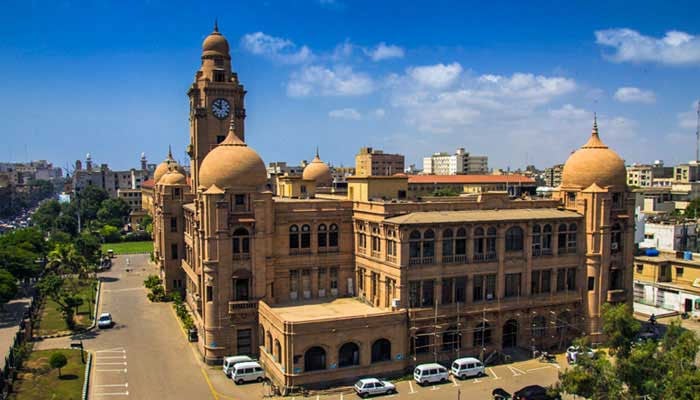
Before independence, British colonial architecture in Pakistan was primarily about establishing authority. Buildings in Lahore, Karachi, and other major cities showcased colonial architecture features that reflected the British desire to imprint their governance and culture.

Colonial Architecture of Pakistan

Key elements of colonial architecture included:

  • Tall columns and symmetrical facades
  • Arched windows and wide verandas
  • Clock towers and domed roofs
  • High ceilings for natural cooling
  • Integration of local materials and crafts for cost and aesthetics

Types of Colonial Architecture & Notable Examples

The types of colonial architecture found in Pakistan span public, educational, administrative, and civic buildings. These structures still define the skyline and cultural identity of major cities.

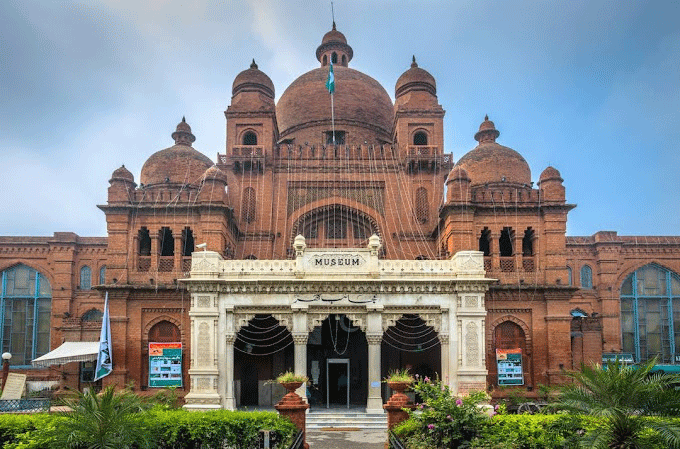
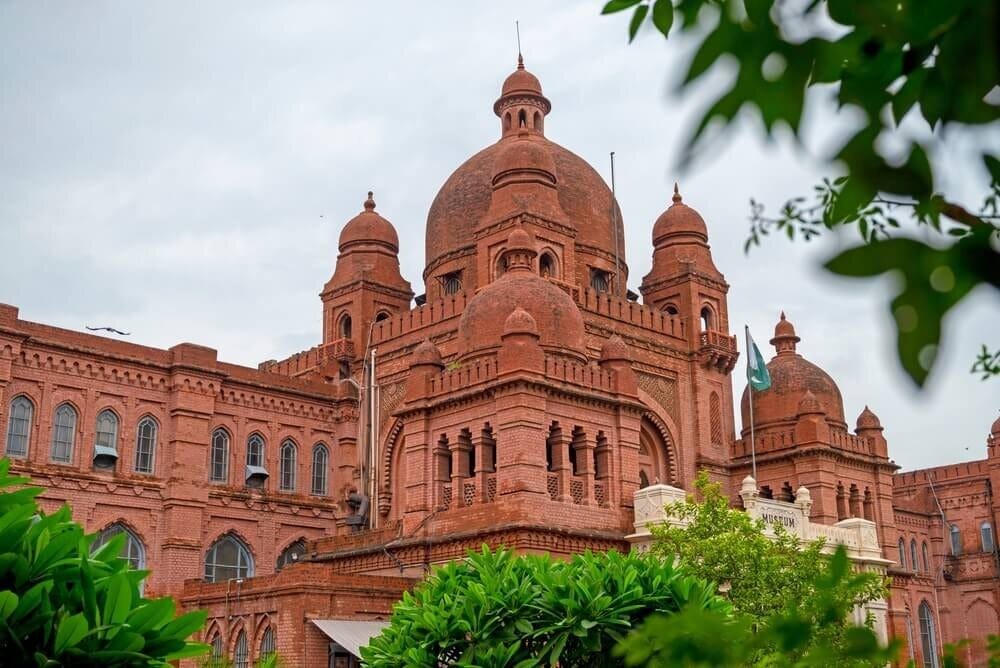
1. Lahore Museum

Built in 1890 to honor Queen Victoria’s Jubilee, Lahore Museum is a masterpiece of red brick Indo-Saracenic design, blending Islamic art with British architectural planning.

Lahore Museum

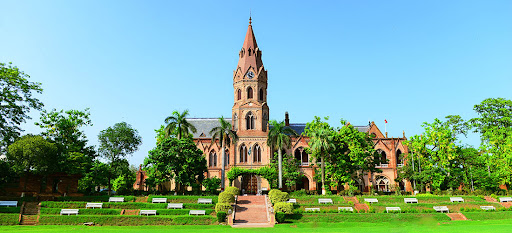
2. Government College University, Lahore

Established in 1877, this neo-Gothic marvel features an octagonal tower, pointed arches, and Chiniot stone — an embodiment of colonial architecture characteristics.

GC University Lahore

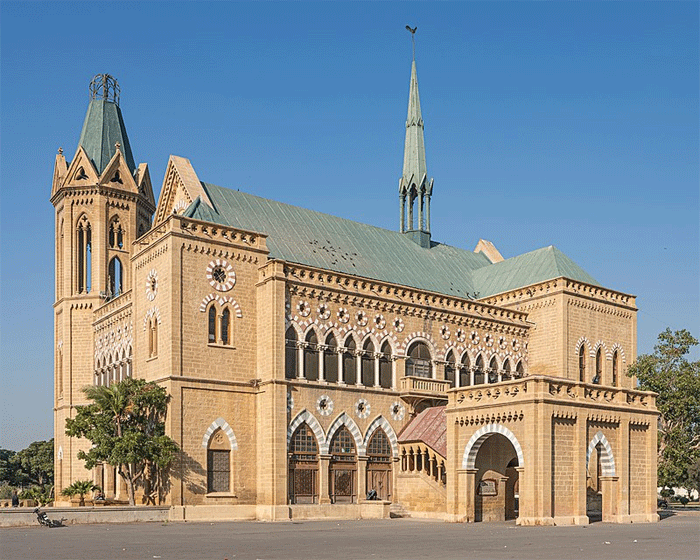
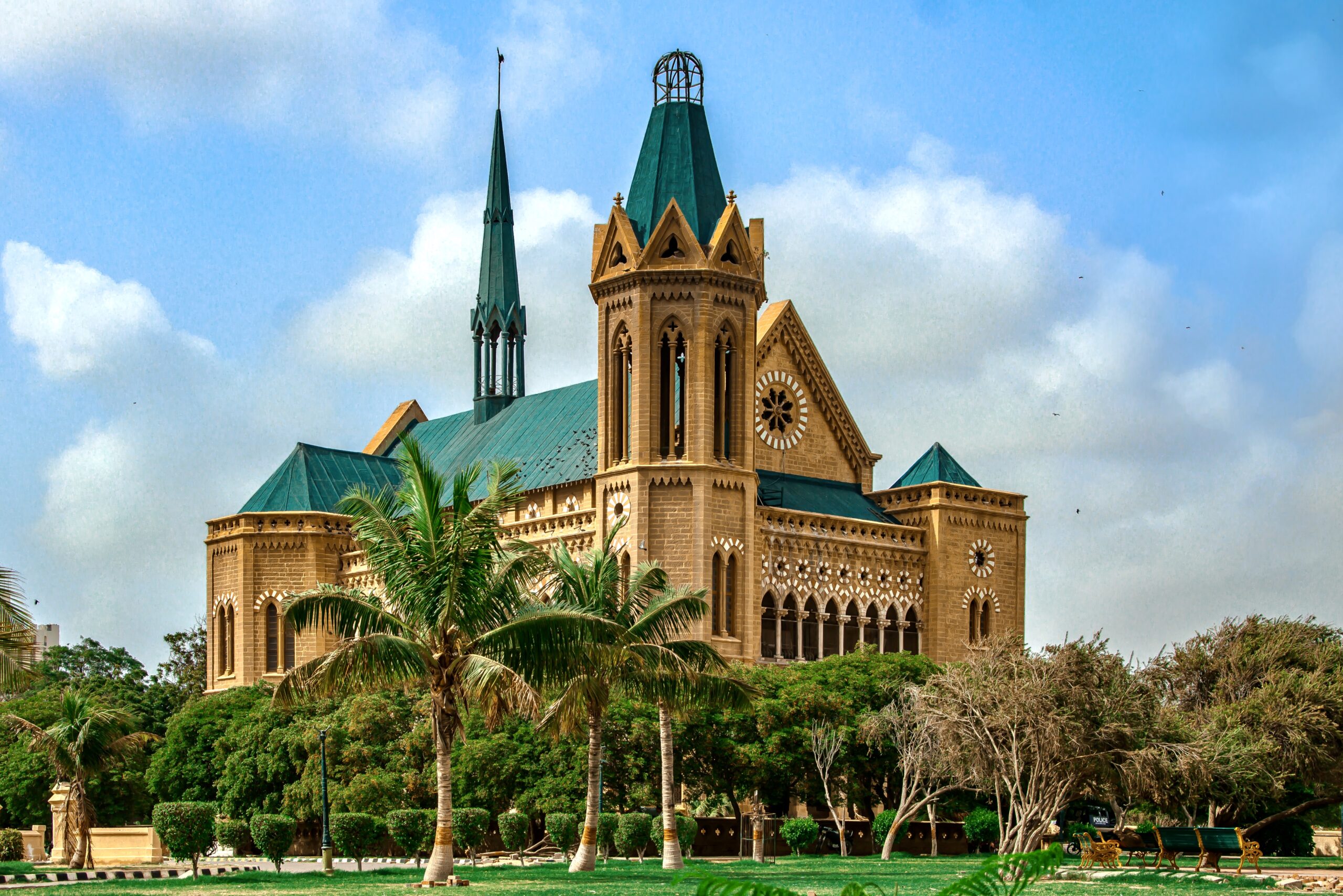
3. Frere Hall, Karachi

Constructed in 1865, Frere Hall stands as a prime example of British colonial architecture in Pakistan. Designed in Venetian Gothic style, it combines flying buttresses, ribbed vaults, and sandstone from Thar and Rajasthan.

Frere Hall Karachi

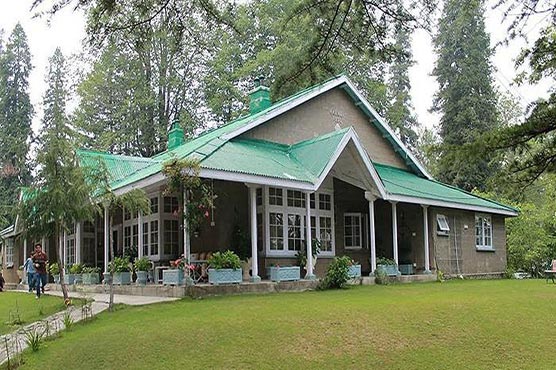
4. Chief Minister House, Nathiagali

A lesser-known gem, this English-style villa with its wooden pitched roof and marbled verandas shows how elements of colonial architecture were adapted to regional climates.

CM House Nathia Gali

Post-Colonial Architecture: From Survival to Sovereignty

Post-independence, Pakistan faced the task of defining its identity not just politically — but architecturally. This gave rise to post-colonial architecture in Pakistan, which sought to blend Islamic traditions with modernist ideals.

Key Themes:

  • Islamic Modernism: Geometric minimalism fused with faith-inspired motifs.
  • Monumentality as National Identity: Structures like Minar-e-Pakistan and Mazar-e-Quaid symbolized national pride.
  • Urban Planning: The creation of Islamabad under Greek architect Doxiadis ushered in a modern vision of Pakistan.

Iconic Post-Colonial Buildings

Here are some of the most iconic post colonial buildings in Pakistan

Faisal Mosque

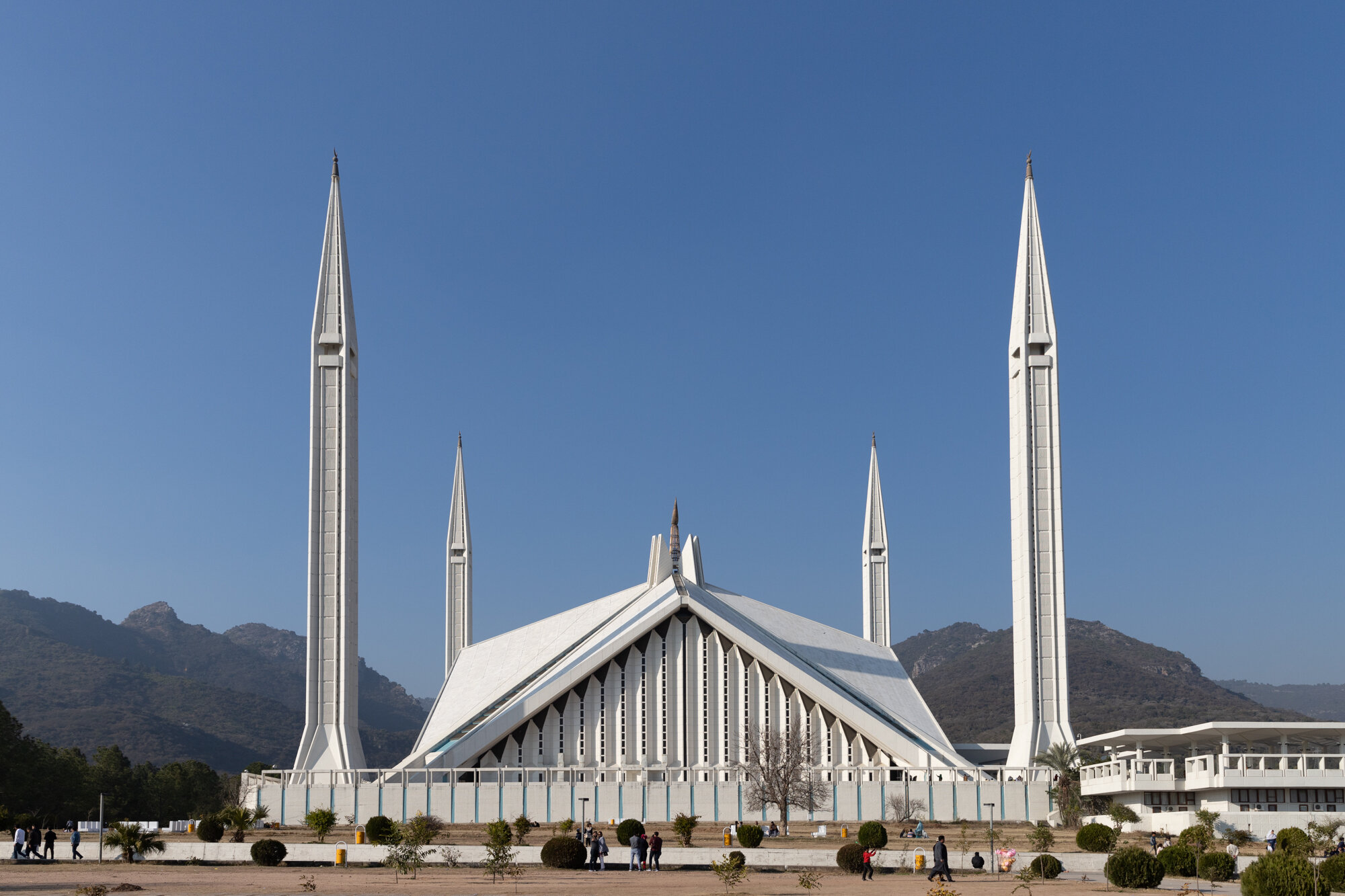
The Faisal Mosque is arguably the most iconic post-independence structure in Pakistan. Designed by Turkish architect Vedat Dalokay, the mosque defies traditional domes and minarets by incorporating a tent-like structure inspired by Bedouin desert tents. Completed in 1986, its minimalist, angular design integrates modern engineering with Islamic symbolism, making it a marvel of modern Islamic architecture. It can accommodate over 100,000 worshippers and remains a spiritual and architectural landmark in the capital.Faisal Mosque

National Monument Islamabad

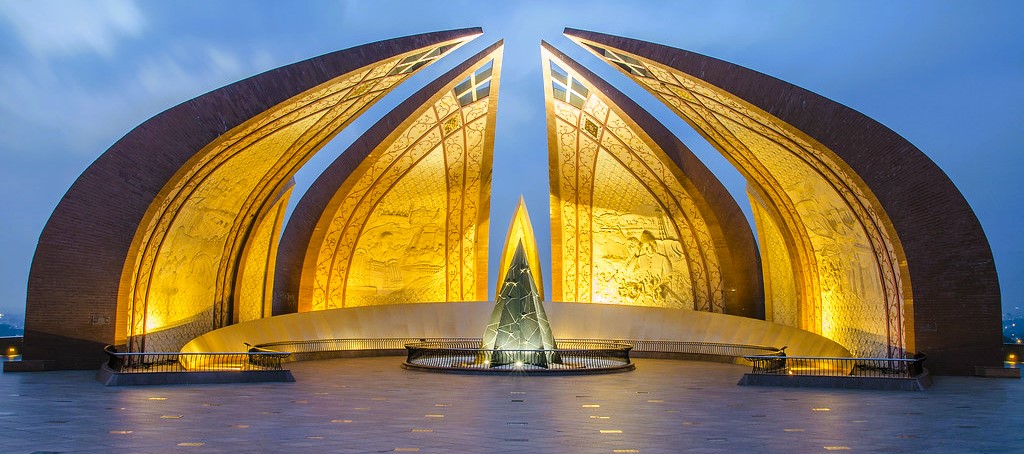
Inaugurated in 2007, the National Monument symbolizes the four provinces and three territories of Pakistan through its four blooming petal-like structures. Designed by architect Arif Masood, the monument is located on the Shakarparian Hills and serves as a tribute to the sacrifices of the Pakistani people. Its inner walls are adorned with artwork depicting important landmarks and heroes of the freedom struggle, making it a national symbol of unity and progress.

National monument of Pakistan

Ziarat Residency

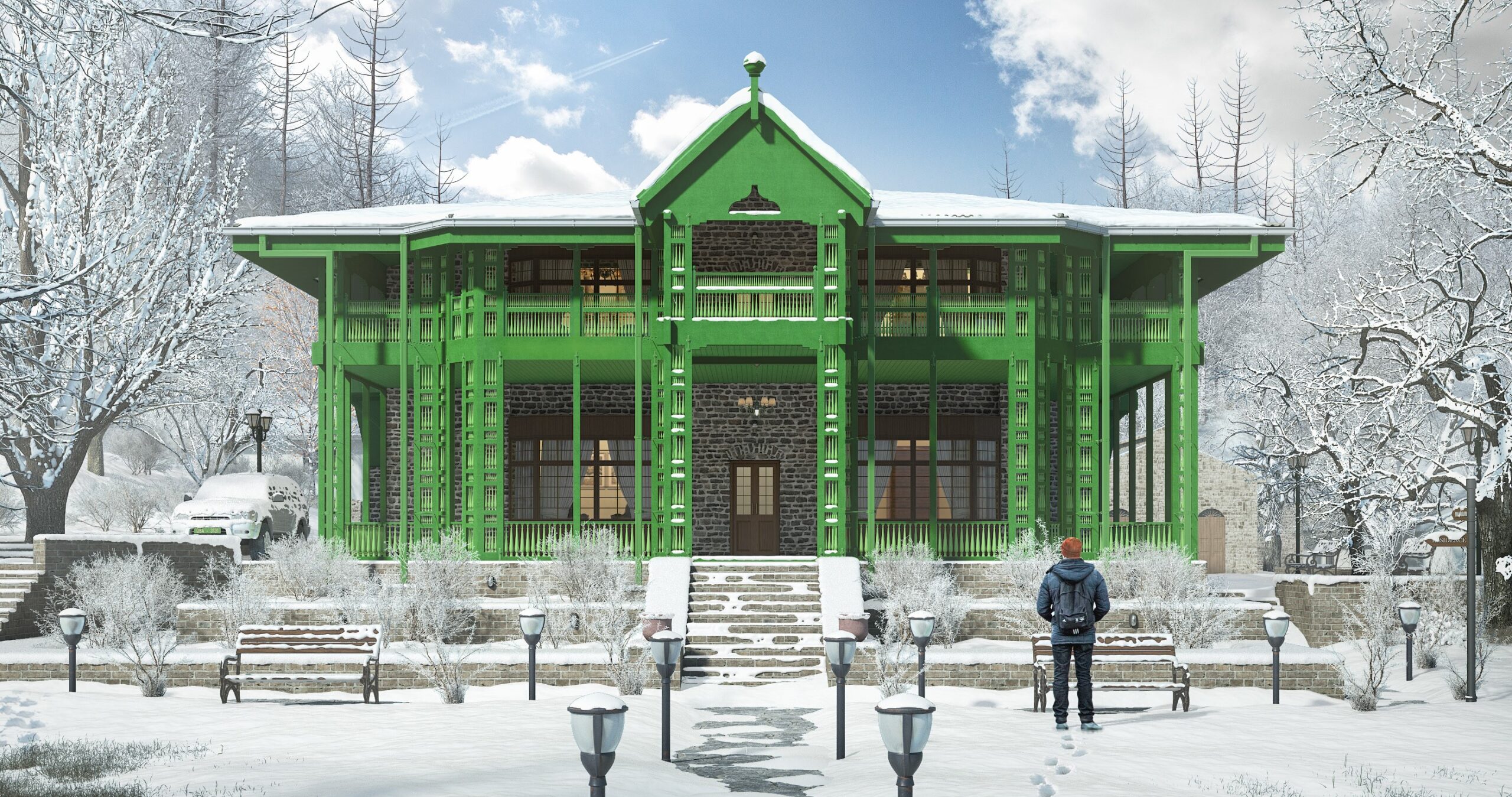
Though originally built in the colonial era, Ziarat Residency gained profound post-colonial significance as it became the final resting place of Quaid-e-Azam Muhammad Ali Jinnah. The building is now considered a national monument, representing the early struggle of the nation and the personal sacrifice of its founder. Its restoration after a 2013 terrorist attack was seen as an act of national resilience and respect.

ziarat residency

Aiwan-e-Sadr (President House), Islamabad

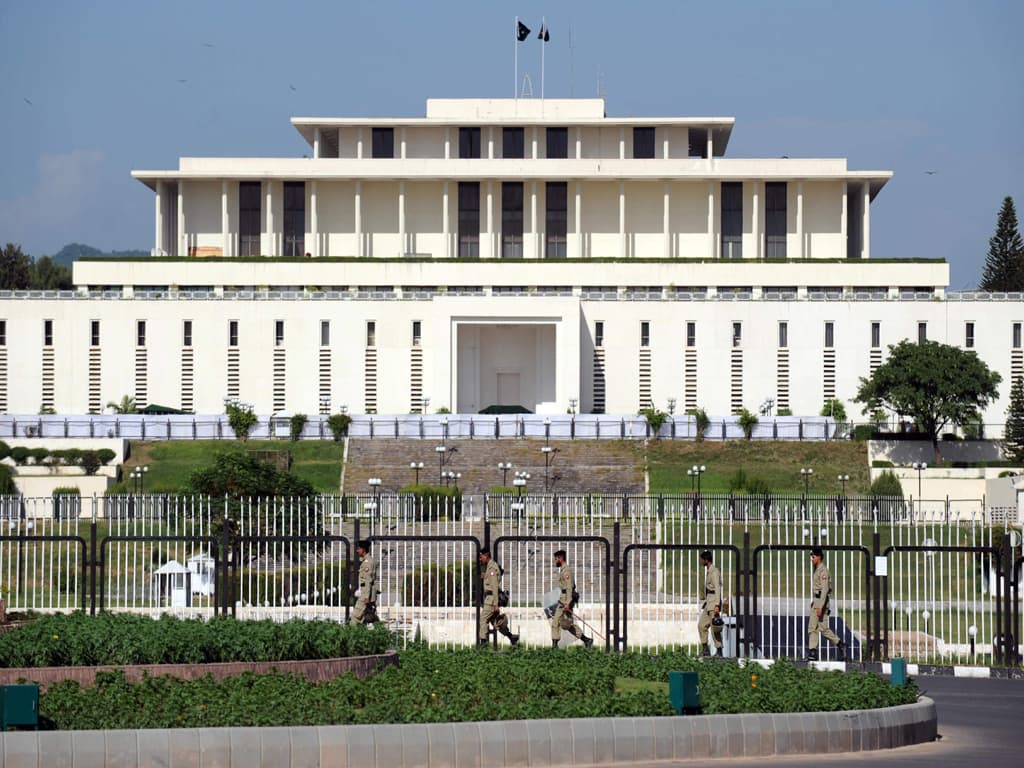
Completed in the 1980s, Aiwan-e-Sadr is the official residence and workplace of the President of Pakistan. The structure exhibits modern Islamic architecture with traditional domes, expansive courtyards, and intricate marble work — symbolizing the authority and sovereignty of Pakistan’s democratic leadership.

Aiwan-e-saddar

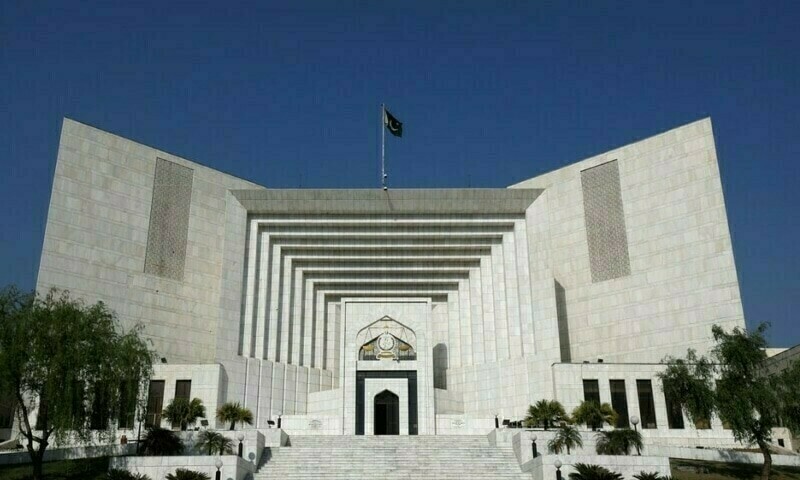
Supreme Court Building, Islamabad

Designed by Kenzo Tange, a world-renowned Japanese architect, the Supreme Court building of Pakistan reflects a unique blend of Japanese minimalism and Islamic geometry. It represents the values of justice, rule of law, and democratic governance in the post-independence era.

Supreme Court

Architecture as a Language of Transition

So, what is colonial architecture today in the Pakistani context? It is a visual reminder of where we started. While its characteristics reflected control, order, and formality, they also laid the groundwork for our understanding of planning, engineering, and civic design. The transition from colonial architecture in Pakistan to post-colonial forms was not just about style; it was about reclaiming identity. Architecture became a tool for self-expression, cultural assertion, and future vision.

Just as the Past Shaped Our Identity, Citadel 7 Defines Our Future

In the heart of Islamabad, Citadel 7 Corporate Tower by Chakor Ventures rises with the spirit of a new era. As Islamabad’s emerging city centre, it echoes the same ambition once reflected in colonial and post-independence architecture: the drive to inspire, to progress, and to belong.

Much like the Indo-Saracenic monuments of the past, Citadel 7 blends innovation with tradition, standing not just as a corporate tower — but as a symbol of the next chapter in Pakistan’s journey.

A new age of architecture, business, and national pride begins here.

Final Thoughts

From colonial architecture in Lahore to post-colonial architecture in Pakistan, our built environment tells the story of our political evolution, cultural heritage, and national aspirations. Understanding what colonial architecture is, appreciating its features, and preserving these buildings isn’t about glorifying the past — it’s about learning from it to shape a more confident future.

As we honor our architectural legacy, we must also embrace the responsibility to build structures that stand for freedom, resilience, and identity — just as Citadel 7 stands today.