
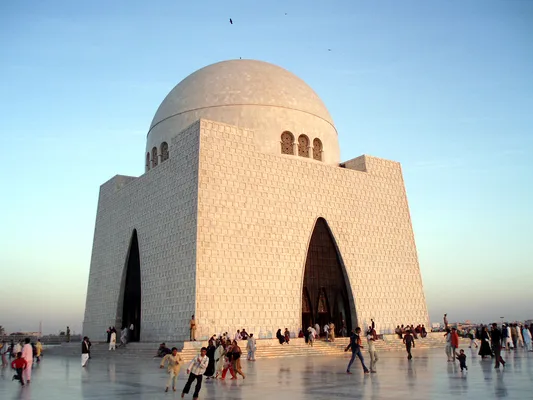
Among Karachi’s most recognizable landmarks, tomb of Quaid e Azam stands as a proud reminder of Pakistan’s history and the legacy of Quaid-e-Azam Muhammad Ali Jinnah. The white marble structure reflects both elegance and national pride, drawing visitors from across the country and beyond. This blog explores its rich history, architectural design, and lasting significance as a symbol of Pakistan’s identity and resilience.
Key Information About the Tomb of Quaid e Azam
| Attribute | Information About Tomb of Quaid e Azam |
| Official Name | Mazar-e-Quaid (Jinnah Mausoleum / National Mausoleum) |
| Location | M.A. Jinnah Road, Jamshed Quarters, Karachi, Pakistan |
| Architect of Quaid e Azam Tomb | Yahya C. Merchant |
| Construction Period | 1960–1971 |
| Height | 43 meters (141 feet) |
| Area | 131.71 acres (including gardens and auxiliary zones) |
| Material | White marble with copper latticework |
| Inauguration | 18 January 1971 by President Yahya Khan |
| Managed By | Quaid-e-Azam Mazar Management Board (QMMB) |
| Notable Burials | Fatima Jinnah, Liaquat Ali Khan, Nurul Amin, Sardar Abdur Rab Nishtar |
Location & How to Reach?
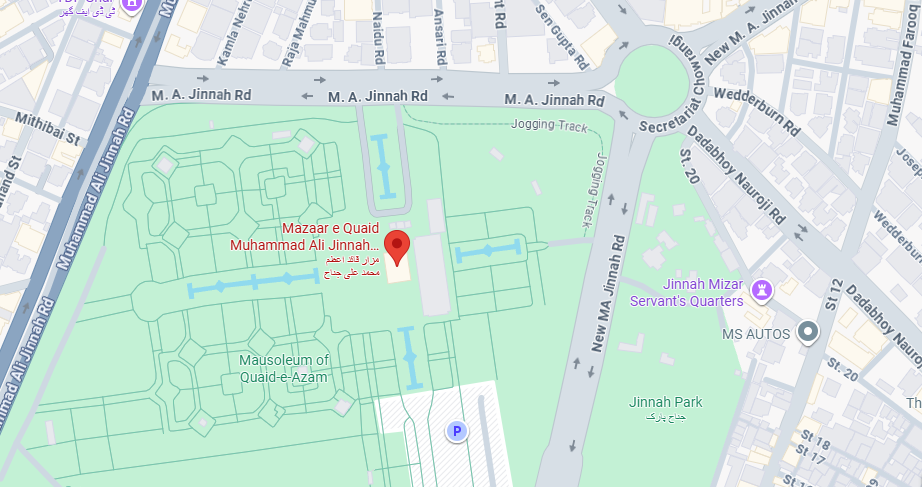
Tomb of Quaid e Azam is located in the heart of Karachi, near Numaish Chowrangi and M.A. Jinnah Road, one of the city’s busiest and most historic routes. Its central position makes it easily accessible from all major parts of Karachi.
Getting to the Tomb of Quaid e Azam
Visitors can reach the mausoleum conveniently by car, public buses, or ride-hailing services like Careem and Uber. The area is well-connected, so finding transport is never a problem, whether you’re coming from Saddar, Gulshan, or Clifton.
History of Tomb of Quaid e Azam
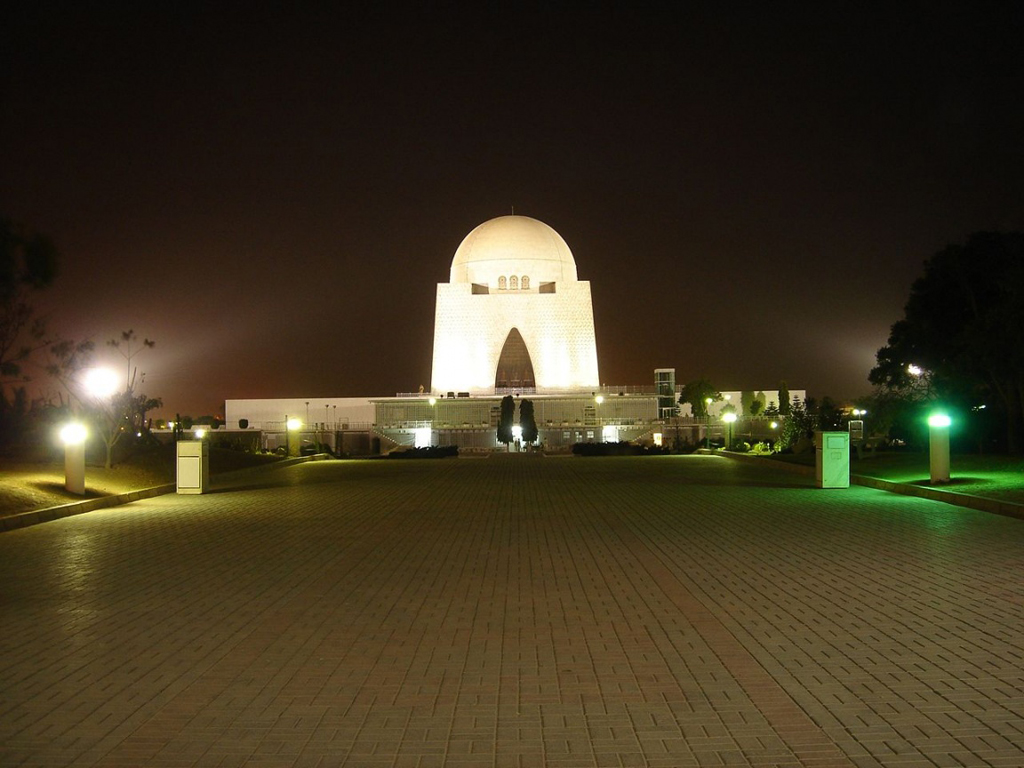
Following the death of Muhammad Ali Jinnah in 1948, a modest white-marble plinth marked his grave. In 1949, the government set up the Quaid‑e‑Azam Memorial Fund (QMF) to plan a fitting national monument to the Founder of Pakistan.
Design Competition and Final Approval
In 1957, the government launched an international design competition to build the mausoleum. The British architect William Whitfield won the competition, but his design was rejected by the QMF and Fatima Jinnah for being too foreign and elaborate.
Eventually, Bombay-based architect Yahya C. Merchant, a personal friend of Jinnah, was commissioned to create the final design in the early 1960s.
Construction & Inauguration
- The foundation stone was laid by President Ayub Khan on 31 July 1960.
- The mausoleum was officially inaugurated on 18 January 1971 by President Yahya Khan, featuring a 43-meter-tall white-marble structure.
- The surrounding neo-Mughal gardens and landscaping were completed later, on 24 December 2000.
Design and Architecture of the Tomb of Quaid e Azam
The design of the tomb of Quaid e Azam is a remarkable fusion of modernist and Indo-Islamic architectural traditions, reflecting both Pakistan’s cultural roots and its aspirations for progress.
Created by architect Yahya C. Merchant, the mausoleum was envisioned as a structure that symbolized dignity, simplicity, and purity, qualities closely associated with Quaid-e-Azam Muhammad Ali Jinnah himself.
Merchant drew inspiration from ancient Islamic architecture, particularly the Samanid Mausoleum in Bukhara, one of Central Asia’s earliest Islamic domed tombs.
The resulting design balances a modern geometric structure with traditional elements like pointed arches and a central dome, a blend that bridges Pakistan’s past with its modern identity.
Structure and Features
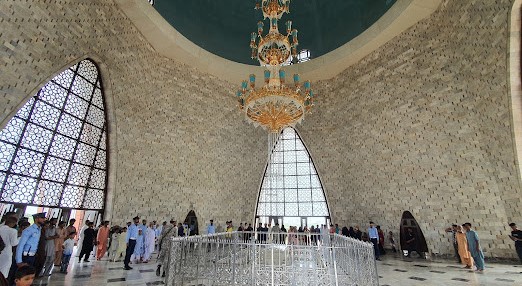
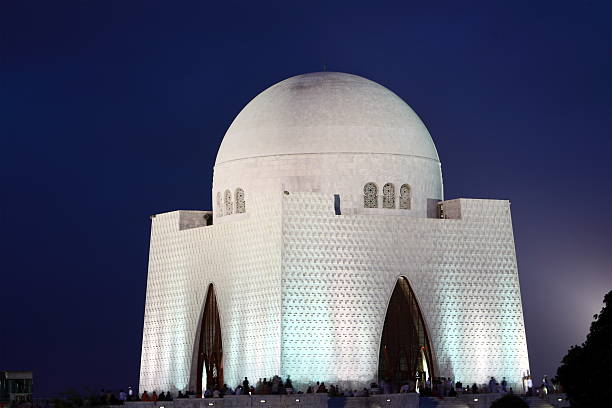
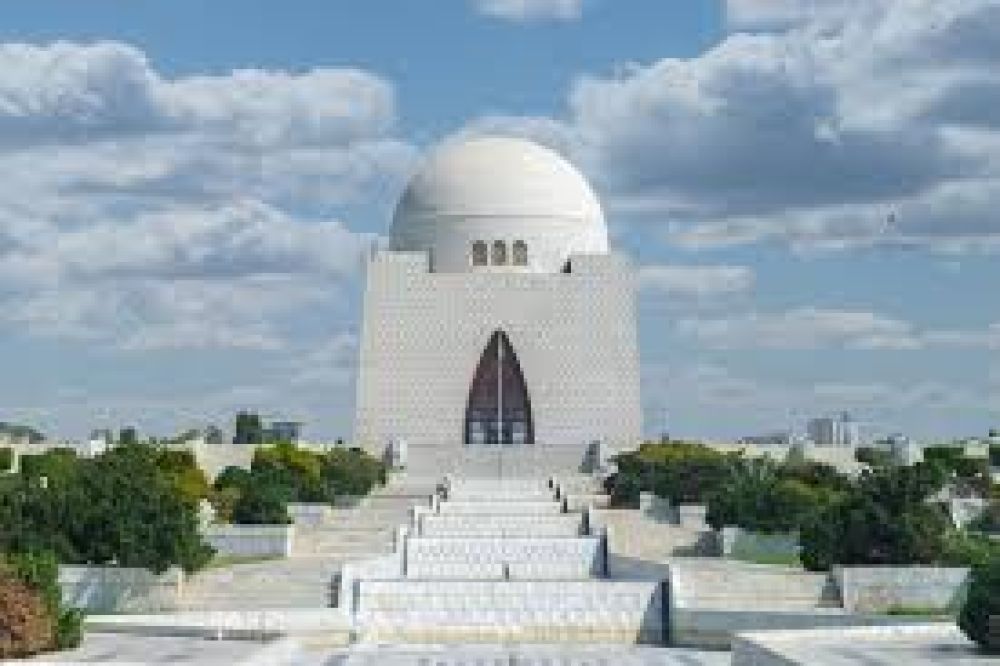
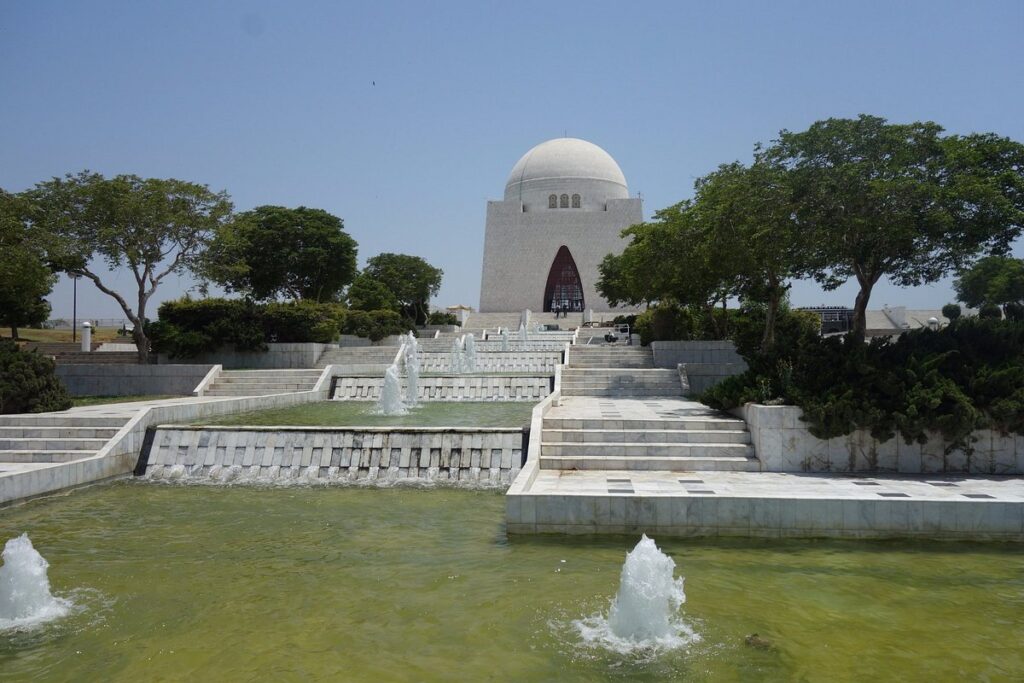
The tomb of Quaid e Azam stands on an elevated 54-metre-square platform, giving it an imposing yet graceful presence above Karachi’s cityscape. At its core is a central dome rising 43 meters (141 ft), surrounded by four pointed arches that serve as entrances on each side, representing openness and unity.
The entire structure is clad in pure white marble, a material chosen for its association with purity, peace, and national integrity. Each entrance is adorned with delicate copper lattice screens, allowing natural light to filter through while maintaining an air of solemnity.
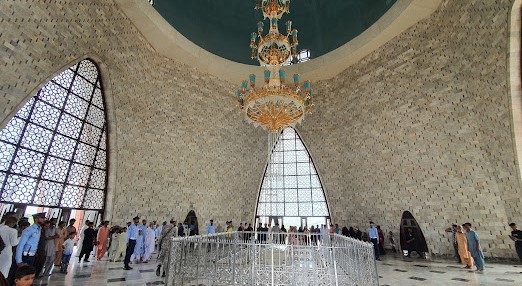
Inside, the sarcophagus of Jinnah rests in the center of the chamber, carved from black marble and surrounded by a polished white marble floor.
Landscape and Layout
The monument is surrounded by the expansive Bagh-e-Quaid-e-Azam, a 61-acre landscaped complex designed to frame the mausoleum in perfect symmetry.
The gardens are laid out in tiered terraces, with fountains, flowerbeds, and wide stone pathways leading up to the central structure. The symmetry of the gardens mirrors the balanced design of the mausoleum itself, creating a sense of harmony and reflection.
The open spaces around the monument were specifically designed to accommodate ceremonial parades, national gatherings, and military honors, turning the tomb of Quaid e Azam into both a spiritual and civic center.
Significance and Symbolism
Tomb of Quaid e Azam is much more than just a mausoleum; it is a symbol of Pakistan’s independence, unity, and national pride. The site is deeply ingrained in Pakistan’s collective consciousness, symbolizing the struggles and achievements that led to the creation of the country in 1947.
The mausoleum is the central hub for the nation’s most significant national events, including Pakistan Day (23rd March), Independence Day (14th August), and Quaid-e-Azam Muhammad Ali Jinnah’s birthday (25th December).
Additional Structures and Museum
Tomb of Quaid e Azam is not just a mausoleum; it houses several other important structures and museum facilities that provide deeper insights into Pakistan’s history and Jinnah’s life.
Aiwan-e-Nawadrat-e-Quaid-e-Azam
This museum is dedicated to preserving Jinnah’s personal belongings, his speeches, and historical documents that offer a closer look at the life and legacy of Pakistan’s founder.
Grave Hall
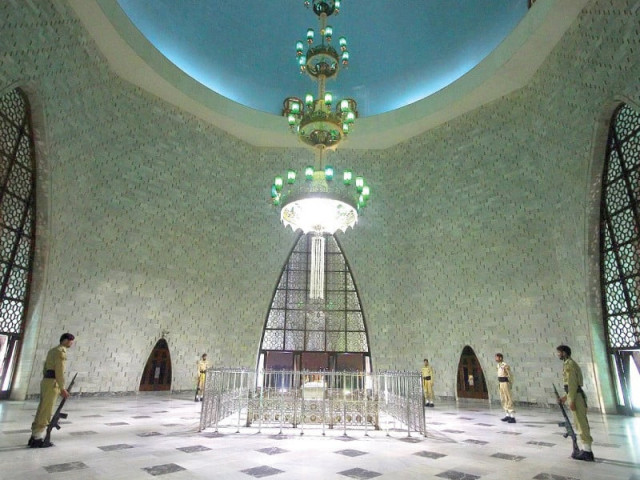
The Grave Hall is a solemn space that contains the tombs of not just Quaid-e-Azam Muhammad Ali Jinnah but also of his sister Fatima Jinnah, Liaquat Ali Khan, and other key figures who played significant roles in Pakistan’s early history.
Visitor Information
Before visiting the tomb of Quaid-e-Azam, make sure to learn about the visit information.
Timings
The mausoleum is generally open to visitors from 10:00 AM to 5:30 PM. However, the timings may vary depending on seasonal changes or special events, so it’s advisable to confirm before planning a visit.
Entry Fees
Entry to the tomb of Quaid e Azam is free for all visitors. It’s an inclusive space, welcoming people from all walks of life to pay homage to Pakistan’s founder. Additionally, guided tours are available to provide more detailed information about the site’s history, architecture, and significance.
Facilities
Tomb of Quaid e Azam offers various amenities for visitors, including gardens, rest areas, and museum halls. The grounds are beautifully maintained, providing a serene and peaceful environment for reflection.
Photography
Photography is allowed in the outer gardens but is restricted inside the mausoleum to maintain the sanctity and respect for the space.
Conclusion
Mazar-e-Quaid stands as a monument of pride and unity, blending architectural brilliance with historical reverence. Beyond serving as the final resting place of Quaid-e-Azam Muhammad Ali Jinnah, the mausoleum is a symbol of the nation’s ideals: faith, unity, and discipline.
For more information on similar historic buildings like Badshahi Masjid, visit Chakor blogs.
