
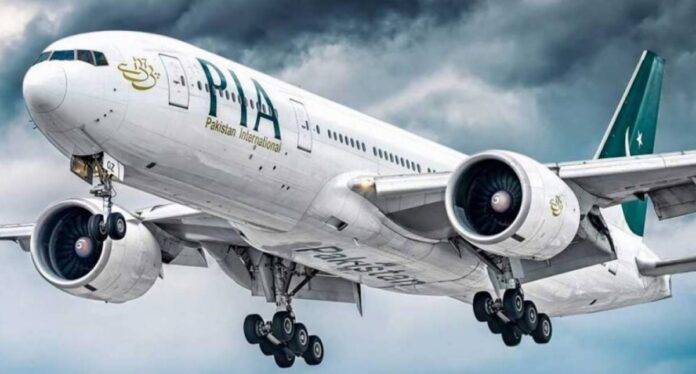
Pakistan’s long-delayed decision to privatize Pakistan International Airlines (PIA) has become one of the most consequential economic reforms in nearly two decades. After years of losses, political interference, and failed sale attempts, the successful auction of a 75% stake in PIA for Rs135 billion by Arif Habib Ltd Consortium in December 2025 represents far more than a corporate transaction. It signals a structural shift in Pakistan’s economic thinking — away from perpetual state ownership toward market-driven reform.
While much of the public discussion has focused on whether PIA is privatized, who won the bidding war, and whether the valuation was fair, a deeper and more important question remains underexplored: What does the privatization of PIA mean for Pakistan’s broader economy — especially real estate and foreign investment?
This article examines PIA privatization as an economic reform, analyzing its direct and indirect impacts on aviation growth, real estate demand, foreign direct investment (FDI), and investor confidence, while addressing the long-term implications for Pakistan’s reform trajectory.
Understanding PIA Privatization in Context
The privatization of PIA marks a significant turning point in Pakistan’s economic trajectory. As the first major divestment since the privatization of K-Electric in 2005, it isn’t merely a financial transaction—it’s a litmus test of the country’s reform credibility.
After a failed attempt to offload PIA in 2024, the government recognized that systemic issues had to be addressed before any meaningful investor interest could be generated. At the time, PIA was weighed down by massive operational losses, an unsustainable cost structure, and a staggering debt burden exceeding Rs650 billion. The airline’s poor safety reputation, underscored by the tragic 2020 Karachi crash, further damaged investor sentiment and led to flight bans from key international regulators such as the UK and EU aviation authorities.
In a bold corrective move, the government undertook a sweeping financial and operational overhaul. Rs654–670 billion of legacy debt was absorbed onto the government’s balance sheet, instantly transforming PIA from a distressed liability into a viable investment proposition. Just as importantly, international flight bans were lifted, restoring access to European air corridors that are vital for revenue and route prestige. These developments restored not only operational credibility but also investor confidence.
This time, the privatization process was designed with transparency at its core. Unlike the previous year’s solitary lowball bid of Rs10 billion, the 2025 auction attracted three credible, pre-qualified consortia. A live-televised bidding war unfolded between Arif Habib Corporation and Lucky Cement, with the former clinching the 75% stake at a final bid of Rs135 billion—far surpassing the government’s minimum reference price of Rs100 billion.
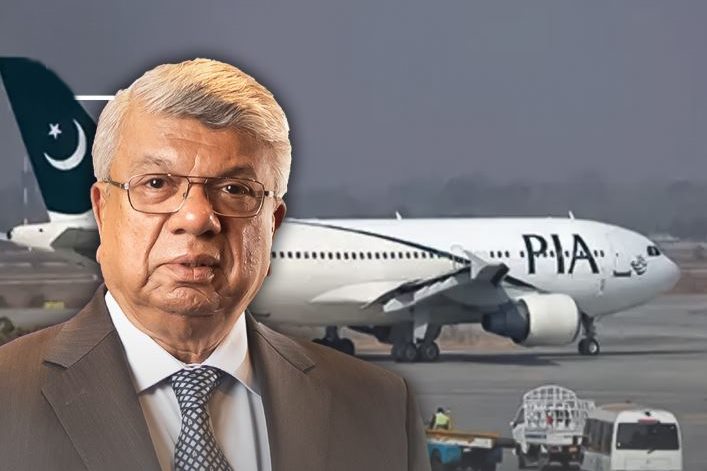
Importantly, the deal was structured not to enrich the public treasury overnight, but to inject fresh capital into PIA’s operations. Only Rs10.1 billion from the bid proceeds will enter the government’s coffers, while the rest will fund fleet expansion, service upgrades, safety compliance, and infrastructure modernization. This signals a pivotal shift in Pakistan’s approach: privatization is no longer seen as a fiscal band-aid, but as a catalyst for operational turnaround and institutional reform.
Alignment with IMF Structural Reform Agenda
By aligning the process with International Monetary Fund (IMF) structural benchmarks, the government also reinforced its commitment to credible economic governance. This alignment not only satisfies IMF conditions under the $7 billion program but also sends a strong message to both domestic and foreign investors: Pakistan is open to transparent, rules-based capitalism.
The privatization structure—where ownership transfer is phased, post-deal investments are ring-fenced, and management insulation is prioritized—demonstrates a sophisticated understanding of political-economy risk. It explicitly addresses past failures where privatization devolved into asset-stripping or triggered ex-post litigation. By separating financial engineering from operational control, this approach offers a roadmap for other state-owned enterprises (SOEs) facing similar challenges.
In short, the privatization of PIA is not a fire sale of a national icon—it’s a strategic recalibration of Pakistan’s public sector role, a test case for responsible privatization, and a signal of market maturity. It represents the shift from a reactive state to a reform-minded, investor-conscious actor capable of unlocking long-term growth through institutional discipline.
Why PIA Privatization Is an Economic Reform — Not Just a Sale
The impacts of privatization on PIA go far beyond a mere shift in shareholder structure. This transformation addresses the deep-rooted structural inefficiencies that crippled the airline for decades, turning a once-celebrated national carrier into a perennial loss-making entity.
Legacy Burdens That Held PIA Back
For years, PIA was plagued by:
-
Chronic political interference, where appointments and operational decisions were influenced by non-commercial considerations
-
Severe overstaffing, with nearly 300 employees per aircraft—far exceeding the international norm of 150–200
-
Safety and compliance failures, culminating in damaging global bans, such as the EU and UK suspensions after the 2020 crash
-
Annual taxpayer bailouts of over Rs35 billion, draining public funds with little return
These legacy issues made PIA unattractive for both commercial growth and investment, deterring local and foreign stakeholders from engaging with the airline.
How Privatization Resets the Playing Field
The privatization of PIA directly addresses these dysfunctions by installing:
-
Professional management insulated from politics, capable of making data-driven, strategic decisions
-
Capital discipline and performance incentives, aligning leadership with profitability and efficiency
-
Route rationalization, prioritizing profitable paths and eliminating wasteful subsidies
-
Corporate governance frameworks, ensuring transparency, accountability, and compliance with international standards
This is a paradigm shift—from political patronage to performance, from bloated bureaucracy to lean strategy.
Ripple Effects on Real Estate and Foreign Investment
These operational reforms don’t just benefit the airline—they influence broader investor psychology. FDI flows and real estate investment are highly sensitive to signals of reform credibility. When a high-profile asset like PIA is restructured successfully:
-
Foreign investors gain trust in Pakistan’s reform agenda and institutional maturity
-
Real estate markets, particularly those linked to aviation and tourism (hotels, logistics parks, serviced apartments), gain momentum
-
Infrastructure investment around major airports (Karachi, Lahore, Islamabad) becomes viable due to predictable aviation traffic and better governance
By removing state inefficiency and political distortion from a major sector, PIA privatization acts as a beacon, attracting both capital and confidence.
How PIA Privatization Links to Real Estate Investment in Pakistan
1. Aviation Growth Drives Real Estate Demand
One of the most immediate and visible impacts of privatization on PIA is the expansion of Pakistan’s aviation sector. With the UK and EU flight bans lifted, and new capital committed for fleet modernization, PIA is set to significantly enhance: international flight routes, domestic connectivity and passenger and cargo capacity.
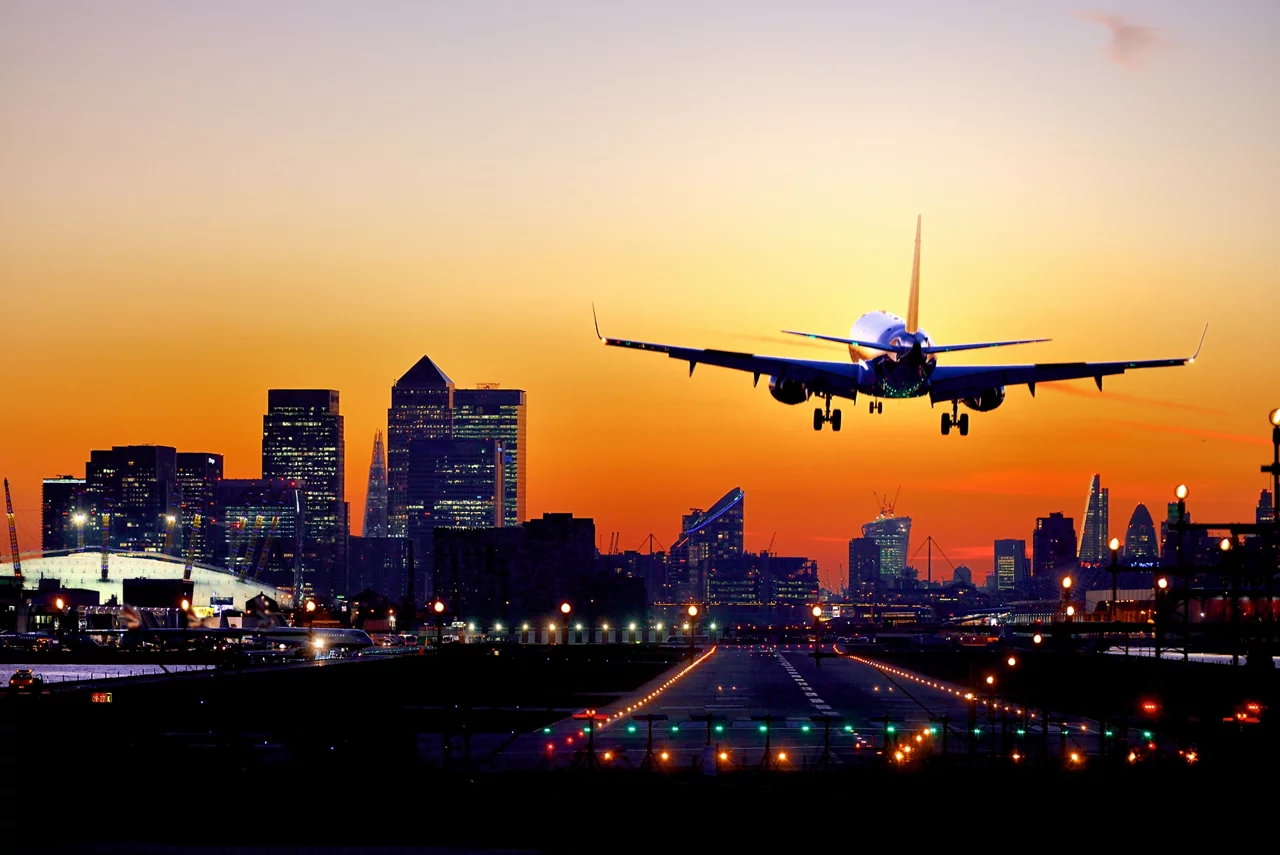
As more planes take off, the movement of people and goods across borders and cities will rise sharply. This surge directly boosts real estate investment in Pakistan, especially in airport-adjacent zones of Karachi, Lahore, and Islamabad.
How Aviation Growth Translates to Real Estate Demand
PIA’s revival under private management will:
-
Increase demand for hotels, serviced apartments, and hospitality real estate, as tourism and business travel rise.
-
Fuel commercial development, such as office spaces, business lounges, and retail outlets near aviation hubs.
-
Expand logistics and industrial real estate, including cold storage, cargo handling zones, and warehousing near airports.
-
Drive residential expansion, particularly for aviation staff and frequent travelers in airport-accessible neighborhoods.
2. Airport-Adjacent Real Estate Gains Momentum
Privatizing PIA strengthens Pakistan’s aviation ecosystem, creating spillover effects around major airports, especially in Karachi, Lahore & Islamabad
Increased air traffic boosts demand for:
-
Hotels and hospitality developments
-
Serviced apartments
-
Commercial plazas
-
Logistics hubs and warehousing
-
Cargo handling and cold-chain infrastructure
Airport-centric real estate has historically delivered premium yields in emerging markets where aviation capacity expands rapidly — a pattern Pakistan now appears poised to replicate.
3. Tourism Revival and Hospitality Expansion
The privatization of PIA coincides with the reopening of European routes, restoring Pakistan’s access to high-value tourism and diaspora travel markets.
Tourism growth stimulates:
-
Resort developments
-
Urban hotels
-
Mixed-use commercial districts
-
Retail and food destinations
Cities with international airports become real estate growth nodes, benefiting developers, REITs, and long-term investors.
Commercial Real Estate and Business Mobility
4. Business Travel Fuels Commercial Property Demand
Improved airline connectivity supports:
-
Multinational corporate travel
-
Regional headquarters operations
-
Trade exhibitions and conferences
As aviation reliability improves, corporate tenants seek Grade-A office space, co-working hubs, and business parks — particularly near airports and central business districts.
This dynamic reinforces demand for:
-
Commercial plazas
-
Business hotels
-
Logistics-linked office infrastructure
Logistics, Warehousing, and Industrial Real Estate
5. Cargo and Supply Chains Benefit from Airline Reform
PIA’s turnaround also enhances Pakistan’s air cargo potential, especially for:
-
Textiles
-
Pharmaceuticals
-
Perishables
-
E-commerce fulfillment
This creates demand for:
-
Warehousing near airports
-
Cold storage facilities
-
Distribution centers
Industrial real estate near Karachi, Lahore, and Islamabad airports stands to benefit significantly as air freight reliability improves.
Foreign Direct Investment (FDI): Why PIA Privatization Matters
6. A Credibility Signal to Global Investors
Foreign investors don’t assess economic reform by political promises—they evaluate execution. In this context, the successful privatization of PIA marks a breakthrough moment, sending strong, market-reassuring signals to global capital markets.
I. Contracts Can Survive Political Cycles
In Pakistan, the history of public-private partnerships (PPPs) and energy sector contracts is marred by ex-post renegotiations, sudden cancellations, and bureaucratic reversals. By successfully completing the PIA privatization process, the state has shown that large, multi-stakeholder transactions can survive political transitions—a crucial signal to long-term investors who require stability across administrations.
II. Competitive Bidding Is Possible
The live-televised bidding war between Arif Habib Corporation and Lucky Cement showcased not only transparency but also genuine market competition. This contrasts with previous failed privatization efforts where insider deals or lack of interest led to weak outcomes. It proves that competitive, rules-based asset divestment is achievable in Pakistan.
III. Large-Scale Transactions Can Be Closed
At Rs135 billion (~$480M), this was one of the largest privatization deals in recent history. Its successful closure shows that Pakistan’s institutions are capable of managing complex, high-stakes financial transactions—a critical trust factor for foreign direct investment (FDI), especially in sectors like energy, telecom, and infrastructure.
IV. State Interference Can Be Minimized
The separation of PIA’s management from direct government control also signals a reduction in political interference, which has historically been a top deterrent for institutional investors. Clear governance structures, performance incentives, and post-deal protection measures demonstrate that the government is serious about insulating private capital from political shocks.
7. Aviation as an FDI Enabler
A functioning national airline is far more than a mode of transportation—it is a strategic enabler of FDI. In the case of Pakistan, the privatization of PIA and its operational revival create ripple effects that go far beyond the aviation industry. For foreign investors, connectivity, convenience, and infrastructure reliability are crucial inputs into market entry decisions.
Improved Connectivity = Lower Market Entry Barriers
When an airline functions efficiently and offers expanded routes, it reduces key frictions that often deter FDI:
-
Lower transaction costs – Executive travel, site visits, due diligence, and logistics become faster and cheaper
-
Reduced travel friction – Easier access to and from major economic hubs like Karachi, Lahore, and Islamabad improves investor confidence
-
Less operational uncertainty – Reliable air transport ensures smoother supply chains and continuity of business operations
These improvements are not abstract—they translate into real-time investment decisions. Investors are more likely to expand into markets where access is predictable and professional, rather than patchy and politicized.
FDI Attraction Across Multiple Sectors
With PIA being modernized post-privatization, Pakistan’s air links with global markets are expected to grow. This development is especially impactful for FDI-intensive sectors such as:
-
Manufacturing: Investors need reliable movement of personnel, machinery, and goods across borders.
-
Real Estate Development: Global real estate developers, architects, and consultants rely on seamless mobility for project oversight.
-
Tourism & Hospitality: The revival of direct flights to Europe repositions Pakistan on the international tourism map.
-
Financial Services: Banks, fintechs, and investors benefit from reliable flight options for regional headquarters and branch expansions.
8. Real Estate as an FDI Gateway
The privatization of Pakistan International Airlines (PIA) is a strategic lever that strengthens all three of these prerequisites, thereby reinforcing the capital flow cycle into Pakistan’s built environment.

Improving City Connectivity Fuels Urban Expansion
By expanding international routes and domestic air access, the revitalized PIA enhances mobility across Pakistan’s major economic centers—Karachi, Lahore, and Islamabad. This reduces friction for businesses, tourists, and trade, making secondary cities more accessible and encouraging development of new growth corridors.
Improved connectivity supports:
-
Airport-linked commercial zones
-
Mixed-use residential communities
-
Suburban real estate clusters with higher livability and commuter access
Enhancing Investor Confidence Through Execution
Foreign investors have long been skeptical of Pakistan’s ability to complete large-scale, transparent privatization deals. The Rs135 billion PIA stake sale, conducted through open bidding, helps dispel that skepticism. It demonstrates:
-
Contract enforcement across political cycles
-
Capability to execute high-value transactions
-
A credible shift towards market-driven reforms
This boosts confidence among international real estate developers, infrastructure funds, and sovereign investors seeking frontier-market exposure.
Supporting Long-Term Urban Growth and Infrastructure Demand
With Pakistan’s urban population projected to cross 50% by the early 2030s, the need for modern housing, transportation, utilities, and commercial space is growing rapidly. The revival of national aviation capacity enables more predictable movement of talent, goods, and capital—essential ingredients for planned urbanization.
PIA’s improved operations make it easier to:
-
Attract global firms to new economic zones
-
Justify large-scale infrastructure investment (airports, logistics parks, highways)
-
Catalyze private-public partnerships for city expansion projects
Impacts of Privatization on PIA and Investor Psychology
The broader impacts of privatization on PIA reshape how investors perceive Pakistan:

From Policy Volatility to Conditional Stability
Policy unpredictability has long been one of the most cited risks in foreign direct investment (FDI) risk assessments. Investors often fear abrupt contract cancellations, regulatory reversals, or shifting political priorities.
By aligning the PIA privatization with IMF structural benchmarks, maintaining process transparency, and ensuring institutional oversight, Pakistan has signaled a move toward conditional, rules-based stability. This change doesn’t remove risk—but it makes it more measurable, which is exactly what long-term capital seeks.
From Asset Decay to Value Recovery
For years, Pakistan’s national assets—airlines, energy firms, steel mills—were symbols of decline rather than growth. The revival of PIA through private capital, alongside the removal of Rs654+ billion in legacy debt, shows that value recovery is possible, even in distressed sectors.
This creates a blueprint for restructuring other loss-making SOEs, making them bankable and investible in the eyes of both local and foreign institutional investors.
Why This Psychological Shift Matters
Investor sentiment is driven as much by perception as by numbers. While fundamentals like GDP, interest rates, and regulatory policy matter, expectations about the future often shape actual capital flows.
-
If Pakistan is perceived as reform-minded, it will attract long-term infrastructure and real estate investors.
-
If it remains seen as politically unstable or anti-business, capital will continue to bypass it for more predictable markets.
The psychological shift triggered by PIA’s successful privatization tilts the scales toward optimism. It sends a message that Pakistan can respect contracts, conduct fair market processes, and pursue growth through market mechanisms.
Addressing Skepticism: Price vs Capability
Critics of PIA privatization often focus narrowly on valuation. However, aviation economics dictate that price alone cannot define success. What matters more is:
-
Capital depth of owners
-
Governance discipline
-
Operational expertise
-
Willingness to absorb early losses
From a real estate and FDI perspective, successful turnaround matters more than headline price, because sustainable aviation growth fuels downstream economic activity.
Labour, Stability, and Transitional Protection
The privatization structure includes:
-
One-year protection against layoffs
-
Preservation of pension rights
-
Transfer of legacy obligations to a holding entity
These measures reduce social disruption while allowing gradual restructuring — a balance that improves political sustainability and investor confidence.
Why Delay Was the Real Risk
In the case of PIA, delaying privatization had significant economic consequences. The airline continued to drain public funds, with annual subsidies exceeding Rs35 billion, putting pressure on already stretched national resources.
Meanwhile, PIA’s international relevance declined, especially after flight bans from major markets like the UK and EU. Prolonged inaction also contributed to the deterioration of aviation infrastructure, with underutilized fleets and outdated systems becoming liabilities.

Crucially, the delay led to missed opportunities in real estate and tourism. Poor connectivity limited growth around airports, holding back investments in hotels, logistics hubs, and commercial zones—sectors that rely heavily on air traffic.
By completing privatization, Pakistan has not only halted this value erosion but also created a foundation for growth across aviation, infrastructure, real estate, and tourism. It’s a strategic shift from managing decline to enabling reform-driven development.
Long-Term Outlook: Aviation, Real Estate, and Growth
Delays in PIA privatization came at a steep economic cost. The airline continued to absorb over Rs35 billion annually in public subsidies, burdening taxpayers without delivering value. Internationally, Pakistan’s aviation reputation suffered, with flight bans diminishing access to key markets and eroding global competitiveness.
Meanwhile, aging infrastructure, grounded aircraft, and weak service quality worsened. Real estate opportunities around airports stalled, and tourism growth remained undercut by poor connectivity.
Now, with privatization executed, Pakistan has reversed the trend of institutional decline. The reform halts value erosion and establishes a platform for recovery—fueling growth in aviation, real estate, logistics, and tourism while restoring investor confidence in the country’s reform agenda.
Conclusion: More Than an Airline Deal
The privatization of PIA is not merely about selling an airline. It is about restoring credibility, unlocking investment, and proving that reform is possible in a system long resistant to change.
For real estate investors, it strengthens demand drivers linked to mobility, tourism, logistics, and urban growth.
For foreign investors, it signals a rare willingness to let markets function.
For Pakistan’s economy, it represents a critical test case — one that could redefine the country’s investment narrative.
PIA privatization, if protected from reversal and politicization, has the potential to reshape Pakistan’s economic landscape — not just in the skies, but on the ground where real assets, capital, and confidence converge.
