
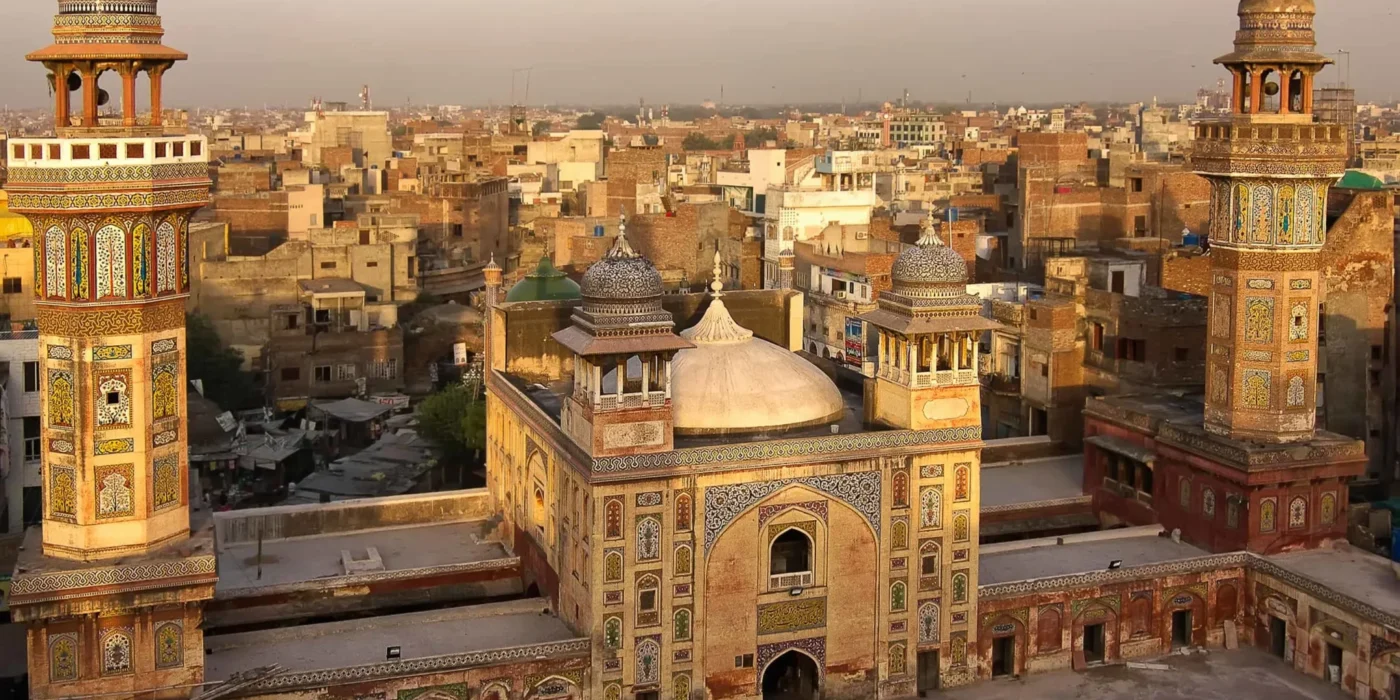
Wazir Khan Mosque stands as one of Lahore’s most remarkable architectural and cultural treasures. Built in the 17th century by the Mughal governor Wazir Khan, it’s known for its stunning tile work, intricate frescoes, and towering minarets. This mosque is not only a place of worship but also a symbol of Lahore’s rich history. In this blog, we’ll dive into its history, architectural beauty, and cultural significance, offering a complete guide to this iconic landmark.
Visitor Information
Wazir Khan Mosque, with its stunning architecture and rich history, is a must-visit landmark in Lahore. Here’s all you need to know about visiting this remarkable site:
Location

Situated in the Walled City of Lahore, Wazir Khan Mosque is in a culturally rich area, known for its historical significance and vibrant local life. The mosque is surrounded by the old city’s bustling streets, making it a captivating spot for history enthusiasts and photographers alike.
How to Reach?
- Nearest Landmarks: The mosque is conveniently located near the Lahore Fort, Badshahi Mosque, and the Shahi Hammam. These iconic landmarks are within walking distance, allowing visitors to explore multiple attractions in a single trip.
- Transportation Options:
- By Car/Taxi: Wazir Khan Mosque is easily accessible by car or taxi from any part of Lahore, especially from major roads like Mall Road and Circular Road.
- Public Transport: Public transport options such as buses and rickshaws are available, with stops near the mosque. The Walled City area is well-served by local transport.
- Walking: For those exploring Lahore’s historical heart, the mosque is also easily accessible on foot from nearby sites in the Walled City.
Best Time to Visit
- Ideal Seasons: The best time to visit the mosque is during the cooler months of November to February, when the weather is more comfortable for outdoor exploration.
- Best Time for Photography: Early mornings or late afternoons are the perfect times for photography, especially at sunrise and sunset when the golden light enhances the mosque’s intricate tile work and frescoes.
Wazir Khan Mosque Entrance Fees & Visitor Guidelines
- Entrance Fees: Currently, there is no entrance fee for visiting Wazir Khan Mosque. However, it is always advisable to check for any updates regarding entrance fees or special guidelines.
- Visitor Guidelines:
- Dress modestly as a sign of respect to the religious significance of the site.
- Visitors are encouraged to maintain the sanctity of the mosque by refraining from loud talking or disturbing other worshippers.
- Photography is allowed, but visitors should be cautious not to damage the delicate frescoes or tiles while taking pictures.
History of Wazir Khan Mosque
The Wazir Khan Mosque was built by Hakim Ilam-ud-Din Ansari in 1634, also known as Wazir Khan, who served as the governor of Punjab during the reign of Mughal Emperor Shah Jahan. Construction commenced in 1634 and was completed in 1641, taking approximately seven years to finish. The mosque was designed to enclose the tomb of Miran Badshah, a revered 14th-century Sufi saint, integrating spiritual and architectural elements.
Architectural Style

Wazir Khan Mosque is a quintessential example of Mughal architecture, incorporating elements from Persian and Central Asian styles. The mosque’s design reflects the grandeur and symmetry characteristic of Mughal structures, with influences from Timurid and Safavid architectural traditions. This fusion creates a harmonious blend of Islamic and regional design elements, evident in the mosque’s layout, decoration, and structural features.
Layout
The mosque is laid out in a rectangular plan, measuring approximately 86.17 x 50.44 meters (282.7 x 165.4 feet). It comprises five main compartments, each topped with a dome, and is centered around a large courtyard.
The central prayer hall is the largest and is flanked by four smaller domed chambers. This layout is designed to accommodate congregational prayers and reflects the traditional Islamic architectural emphasis on communal worship spaces.
Domes and Minarets

- Domes: The mosque features five domes: the central dome is 31 feet (9.4 meters) high and 23 feet (7 meters) in diameter, while the four smaller domes are 21 feet (6.4 meters) high and 19 feet (5.8 meters) in diameter.
- Minarets: Four octagonal minarets, each 107 feet (32.6 meters) tall, mark the corners of the main courtyard. These minarets are adorned with intricate tile work and are among the earliest examples of muqarnas (stalactite-like ornamentation) in South Asia. They serve both aesthetic and functional purposes, enhancing the mosque’s verticality and providing access to elevated platforms.
Kashi-Kari

The Wazir Khan Mosque inside and outside, both are adorned with kashi-kari, a form of glazed tile work that originated in Persia. This technique involves the use of vibrant, colored tiles arranged in intricate patterns.
The tile work at Wazir Khan Mosque includes motifs such as cypress trees, floral designs, and geometric patterns, reflecting Persian artistic traditions. The use of cobalt blue, cerulean, white, green, orange, yellow, and purple tiles creates a visually striking effect.
Notably, the mosque’s minarets feature motifs of cypress trees and stars, enhancing their decorative appeal.
Frescoes

The interior walls of the mosque are embellished with buon frescoes, a traditional painting technique applied directly onto wet plaster. These frescoes depict scenes from Islamic paradise, including trees, pitchers of wine, and platters of fruit, symbolizing the rewards of the afterlife.
The frescoes combine imperial Mughal elements with local Punjabi decorative styles, creating a unique artistic expression.
Calligraphy

Arabic calligraphy adorns various surfaces within the mosque, including verses from the Quran and sayings of the Prophet Muhammad (PBUH).
The calligraphy is executed in various scripts, including Nasta’liq, Thuluth, and Tughra, showcasing the artistic versatility of Islamic calligraphers. These inscriptions not only serve decorative purposes but also convey spiritual messages and teachings.
Muqarnas

Muqarnas, a form of decorative vaulting, are prominently featured in the mosque’s architecture. The entrance iwan (arched portal) is adorned with one of Lahore’s first examples of muqarnas, displaying intricate geometric patterns. This architectural feature, which originated in the Middle East, adds depth and complexity to the mosque’s design.
Restoration & Conservation Efforts
The preservation of Wazir Khan Mosque has been a long-term endeavor, with several challenges and initiatives aimed at maintaining its grandeur for future generations. Here’s a look at the ongoing restoration and conservation efforts:
Challenges Faced
- Urban Encroachment: As Lahore has expanded, the area around the mosque has faced rapid urbanization, threatening its visibility and accessibility. Buildings and infrastructure encroach on its surroundings, impacting the mosque’s prominence.
- Pollution and Weathering: The mosque has suffered from environmental factors such as pollution and weathering, causing damage to its intricate frescoes, tiles, and masonry. Exposure to pollutants and the harsh climate has eroded parts of the structure over time.
Major Restoration Projects
- 2009 Restoration: A significant restoration project began in 2009 to address some of these issues, focusing on cleaning and stabilizing the structure, as well as conserving the decorative elements. This included restoring the frescoes, tile work, and calligraphy that make the mosque an architectural masterpiece.
- Ongoing Efforts: Conservation efforts continue today, with both local and international organizations actively involved in preserving the mosque’s artistic and architectural features. Efforts focus on structural repair, cleaning tiles, and restoring murals to prevent further deterioration.
Cultural Impact and Tourist Attraction
Wazir Khan Mosque isn’t just a religious site; it’s a cornerstone of Lahore’s cultural and historical fabric. Its significance extends beyond its architectural grandeur, drawing tourists and cultural enthusiasts from around the world. Here’s how it impacts both locals and visitors alike:
Role as a Tourist Destination in Lahore
Wazir Khan Mosque is one of Lahore’s most visited landmarks, attracting thousands of tourists each year. Its stunning Mughal architecture, rich history, and spiritual atmosphere make it a must-see for anyone exploring the city.
Located in the heart of the Walled City of Lahore, it serves as an anchor point for a journey through Lahore’s past, bringing both domestic and international visitors to experience its unique heritage.
FAQs
The following are some of the frequently asked questions regarding the Wazir Khan Mosque.
Who built the Wazir Khan Mosque?
The Wazir Khan Mosque built by Hakim Ilm-ud-din Ansari, is also known as Wazir Khan, who served as the Governor of Lahore during the reign of Mughal Emperor Shah Jahan.
Where is Wazir Khan Mosque located?
Wazir Khan Mosque is located in the walled city of Lahore.
When was the Wazir Khan Mosque built?
The mosque was completed in 1641 during the reign of Emperor Shah Jahan, commissioned by the Mughal governor Wazir Khan.
Who was Wazir Khan, and what is his connection to the mosque?
Wazir Khan was the Mughal governor of Lahore, and he commissioned the mosque to showcase Mughal architectural excellence and to serve as a center of worship.
What are the key architectural features of Wazir Khan Mosque?
Key features include Kashi-kari glazed tiles, frescoes, muqarnas, large domes, minarets, and a spacious courtyard.
Is Wazir Khan Mosque open to tourists?
Yes, the mosque is open to tourists. It offers guided tours, allowing visitors to admire its architectural and cultural significance.
Conclusion
Wazir Khan Mosque is a masterpiece of Mughal architecture and an essential part of Lahore’s history. Its stunning tile work, frescoes, and spiritual significance make it a must-visit landmark. Whether you’re a history enthusiast, architecture lover, or cultural traveler, don’t miss the chance to experience this symbol of Mughal excellence. For more information, visit Chakor blogs.
