
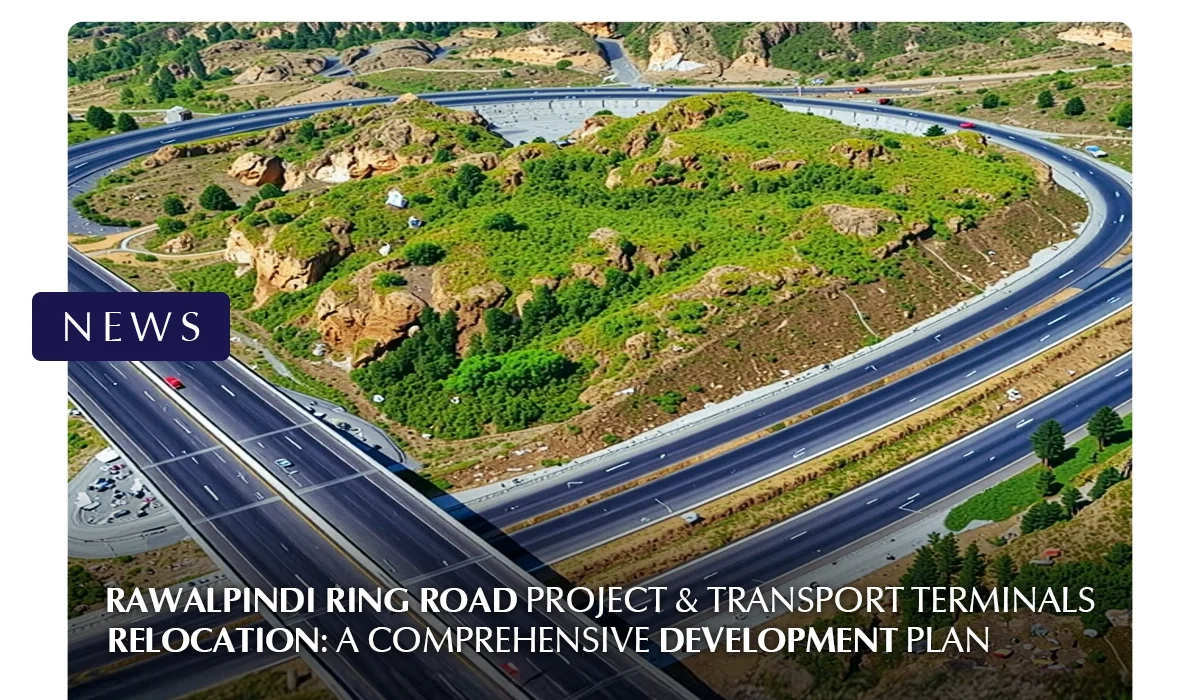

In a major move to alleviate traffic congestion and improve infrastructure, the Rawalpindi Development Authority (RDA) is making significant progress on the Rawalpindi Ring Road Project and the relocation of 44 key transport terminals. The dual initiatives are set to reshape the city’s traffic management, boost regional connectivity, and transform Rawalpindi’s transport landscape.
Rawalpindi Ring Road: Progress and Impacts
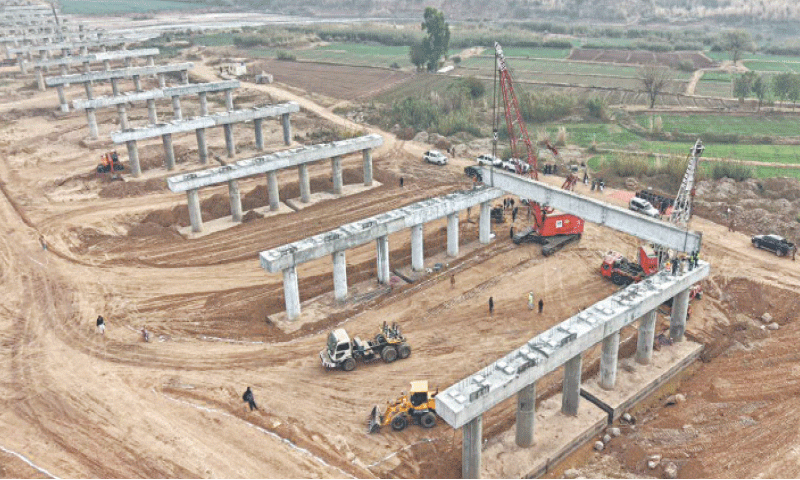
The Rawalpindi Ring Road, a crucial part of the city’s transportation overhaul, is a 38.3-kilometre, six-lane highway designed to connect key zones in Rawalpindi and Islamabad. The project aims to reduce congestion and improve access to regional economic zones.
- Current Progress: As of the latest reports, the project is 70% complete, with structural work, road surfacing, embankments, and drainage systems progressing steadily. Key sections, including the Banth to Thallian Interchange, are already under construction.
- Revised Timeline: The Rawalpindi Ring Road, initially slated for completion by December 2025, now has a new deadline of March 2026. The project’s total cost has been revised upwards to Rs. 50 billion due to the redesigning of the Thallian Interchange, a critical junction connecting the Ring Road to the M-2 Motorway.
- Expected Benefits: The Ring Road will significantly ease traffic congestion in Rawalpindi, improve access to major highways, and facilitate smoother connectivity to Islamabad. Once completed, it will reduce traffic volume on city roads, benefiting both commercial and commuter traffic.
- Project Management: The construction is being carried out by Frontier Works Organisation (FWO) under the oversight of the Rawalpindi Development Authority (RDA).
Relocation of Transport Terminals: Strategic Planning for Traffic Management
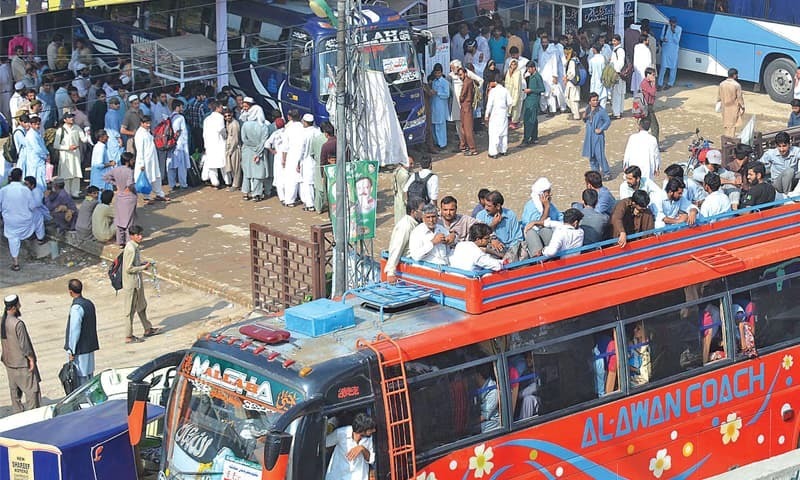
In line with the vision to streamline Rawalpindi’s transport system, the Punjab government has approved the relocation of major transport terminals to areas near the Rawalpindi Ring Road. This move aims to reduce traffic congestion within the city, particularly from heavy transport vehicles.
- Pirwadhai Bus Stand: The prominent Pirwadhai General Bus Stand, along with other terminals, will be shifted to a more centralised location along the Ring Road. This relocation will accommodate inter-district buses and intra-city transport, improving traffic management and passenger operations.
- New Terminal Locations: Other transport terminals, including those at Faizabad and Chungi No. 26, will also be closed, with all long-distance and goods transport hubs moved to strategic locations along the Ring Road.
- Key Routes:
- Transport coming from Peshawar will now operate from a new terminal near Islamabad Airport.
- Vehicles from Azad Kashmir via Murree will stop at Bharakahu, while those coming from other districts will enter through Rawat.
- Traffic and Fare Adjustments: The relocation will impact local travel. Fares for intra-city buses will range from Rs. 20 to Rs. 50, while passengers travelling to the newly relocated terminals may experience changes in travel time.
- Policy Changes: To complement the relocation, the Punjab government will enforce a ban on heavy transport vehicles entering the city’s core. Any violating vehicles will face impoundment. Public transport buses and wagons will ferry passengers from the Ring Road terminals into the city centre, offering seamless connectivity.
Long-Term Impact: Urban Mobility and Economic Growth
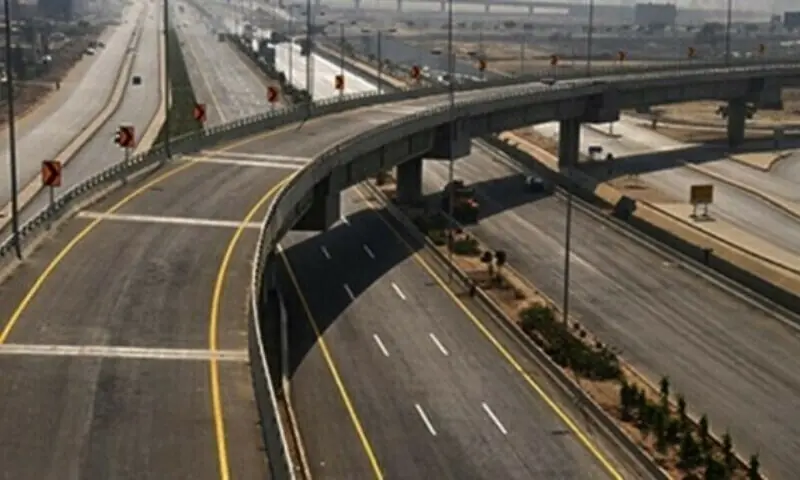
Both the Rawalpindi Ring Road Project and the relocation of transport terminals are part of a comprehensive urban development strategy. By reducing congestion and improving connectivity, these initiatives are expected to enhance the city’s overall mobility, improve air quality, and stimulate local economic growth.
- Environmental and Aesthetic Benefits: The Ring Road project incorporates green initiatives, including the creation of green belts, better drainage systems, and improved traffic safety measures. These will contribute to a cleaner, more sustainable urban environment.
- Public Response: While many residents welcome the plan for its long-term traffic management benefits, some have expressed concerns about longer travel distances and the costs of relocating terminals. However, the shift is being framed as a necessary step to manage Rawalpindi’s increasing population and transport demands.
A Vision for a Modern Rawalpindi
With Rs. 50 billion invested in the Rawalpindi Ring Road Project and additional resources allocated for terminal relocations, the city is witnessing one of its most significant infrastructural transformations.
The development of this vital infrastructure will not only ease traffic congestion but will also position Rawalpindi as a model for modern urban mobility in Pakistan.
As the project progresses towards its 2026 completion, Rawalpindi’s residents and visitors can look forward to enhanced connectivity, reduced travel times, and a cleaner, more efficient transport system.
For more news on real estate and development, visit Chakor Ventures.

BBC-featured Content Specialist with a sharp eye for search intent and a proven ability to turn content into a growth engine. I leverage cutting-edge digital marketing tools to craft strategies that fuel organic traffic, amplify brand growth, and own the local SEO landscape, particularly across the competitive real estate market. I help brands dominate search rankings and convert visibility into measurable business success.
